



By Mandar Patil, EVP, Cyble
Today, your mobile phone number is associated with a lot of information other than calls or messages. Your phone number can be used with bank accounts, email accounts, UPI apps, social media accounts, and other essential services as well. The fact that hackers consider the mobile number as an important target makes it even more dangerous because of the increasing number of techniques used in such attacks; for instance, SIM swapping is one of the most dangerous scams. This is done when a hacker manipulates a telecom operator into moving your phone number to a SIM card owned by hackers.
What SIM Swapping Is?
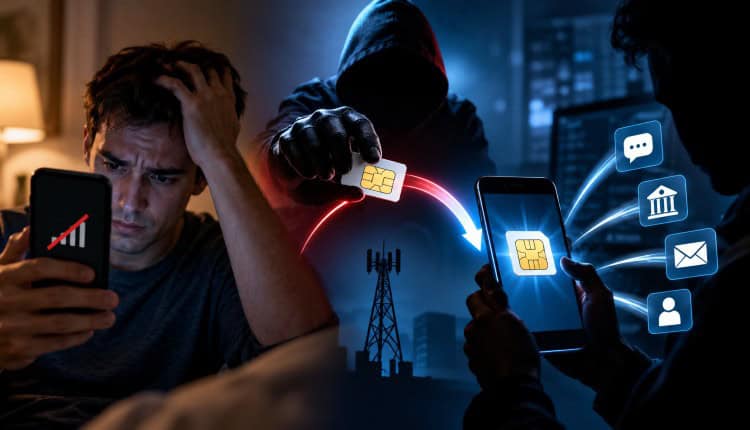
SIM swapping (also referred to as SIM hijacking or SIM-porting fraud) occurs when an attacker tricks a phone company into believing that he/she is the authorized owner of a phone number. The attacker can get some stolen information and then convincingly answer the verification questions asked by a mobile operator or show fake documents. If it works, then the mobile company activates the number of the victim on a new SIM card while the original SIM card stops working and the SIM card created by the hacker starts to receive calls and messages intended for the victim.
How Does It Work?
The process of SIM swapping begins with gathering information. Cybercriminals may obtain the necessary information about a particular person through phishing emails, false sites, leaked databases, social media, and other fraud schemes. They may then contact a telecom operator and claim that their SIM card was lost or damaged and needs to be changed. Sometimes, cybercriminals take advantage of some weak points in the verification system; for instance, they may convince call operators by using social engineering techniques.
Sudden Loss of Network Can Act as a Warning Sign
For people who lose their mobile connection unexpectedly, this is one of the biggest red flags. If a phone shows “No Service”, it can’t get calls or texts, or everything works unexpectedly even though one is in an area with normal coverage, then they shouldn’t jump to the conclusion that it is a technical issue. One of the signs might be receiving a message about SIM replacement or account activity one did not make. If this happens just after the strange password-reset and banking alert messages come through, it is important to act.
What Can Hackers Do after SIM Swapping?
Once criminals control the relevant phone number, they can receive delivered SMS with one-time-pass and password reset codes. This gives them a great opportunity to hack into email, social media or financial accounts. In extreme cases, criminals can even try to find ways to steal money, change account recovery information, pretend to be the victim, or close access to important services.
How to Protect Yourself
The best thing people can do now is not to use SMS authentication if there are some stronger alternatives. They should use an authenticator app or key whenever possible. Emails have to be protected very carefully, as they are used for recovering accounts. One should use a long and complicated password that is different from other passwords. It is also important not to give any personal information, including date of birth or address, in any cases.
SWI-If You Fear a SIM Swap
You should always contact your cellular carrier immediately through the customer support number if your SIM card suddenly becomes unusable without any explanation. Inquire whether a new SIM card or a temporary number transfer request was made recently. Simultaneously, take steps to secure your important accounts. If any confidential information was compromised, reach out to your bank as well as change passwords of the compromised accounts. Also, keep an eye on any recent transactions as well as account recovery activities. SIM swapping is possible because phone numbers often serve as the best means of proving identity. You should be careful and stop relying solely on your mobile number to be safe.