

Watt’s Up with AI? Plugging the Data-Driven Revolution

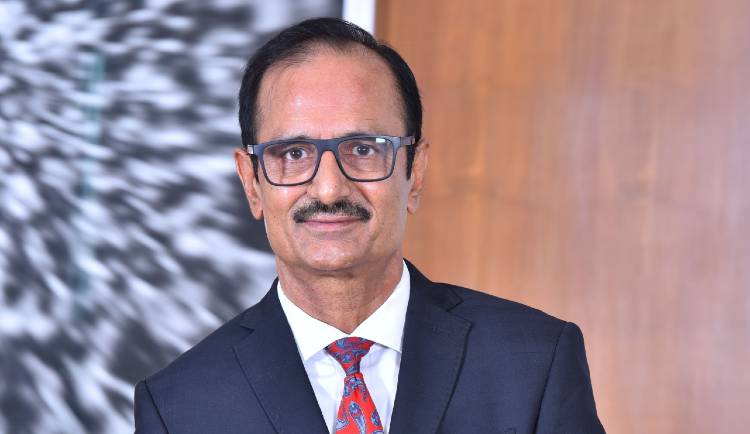

By Sharad Mahendra, Joint Managing Director & CEO, JSW Energy
As the CEO of JSW Energy, I am acutely aware that the AI revolution is not just transforming industries through automation, predictive analytics, and enhanced decision-making—but also exponentially increasing the demand for electricity,creating a significant business opportunity for us.
The astonishing facts of AI-driven energy demand
Recent studies and industry reports reveal the astonishing scale of this demand:
* Data centre power consumption is doubling rapidly: By 2030, India’s data centres—driven heavily by AI workloads—are projected to require between 50–57 TWh annually, about a 3.5–4x increase from 2024 levels (13–17TWh).This will represent approximately 2.6–3% of India’s total electricity consumption in 2030.
* Energy intensity of AI training: Training a single large language model with over 175 billion parameters (e.g., GPT-3) typically requires about1,287M Who felectricity. This is roughly equal to the annual usage of 120 average U.S. households. The cumulative impact of repeated or scaled training will carry significant energy implications.
Emerging regional and global challenges
A few countries, like Ireland, already see data centres consuming up to 20–25% of national electricity supply, sparking debate around grid stability and sustainability.In most regions,data centres remain below 5% of grid load, but the challenge of integrating more renewables and advanced cooling is urgent worldwide.
Business opportunity for JSW Energy
The rapid escalation of data centre energy needs provides large-scale growth opportunities:
• India’s hyper scale data centres will require about 8–9G Wof capacity by 2030, a major increase driven by digital and AI sector expansion.
• Operators will increasingly demand green, reliable power driven by renewable energy, grid modernisation, and advanced storage solutions.
• Supporting the AI ecosystem with tailored off-grid, energy-as-a-service models, and efficient cooling presents JSW Energy with a unique value proposition in clean digital infrastructure.
Execution Strategy
JSW Energy has adopted a dual-focused AI strategy:
• Optimising with AI: We leverage AI extensively within our operations to improve forecasting accuracy, maintenance scheduling, grid management, and customer insights. AI-powered digital twins, predictive analytics, and trading algorithms enhance agility and profitability.
• Meeting AI-driven energy demand: We are preparing supply infrastructure to meet the rapid expansion of AI-related electricity demand. This includes scaling renewables, deploying smart grid technologies, and partnering with datacentre operators to provide tailored, sustainable power solutions.
Tangible impact-AI driving operational excellence and energy growth
JSW Energy’s AI initiatives are driving a transformative shift from manual, experience- based operations to data-driven, self-learning intelligence across the energy value chain. The strategy focuses on three foundational pillars:
• Optimisation–Improving efficiency and cost-effectiveness through AI-based decision support.
• Prediction–Anticipating operational, commercial and maintenance outcomes.
• Perception–Empowering visibility, safety and situational awareness through computer vision, natural language understanding, generation, and agentic intelligence.
At JSW Energy, more than 10 initiatives have been implemented and many more are in pipeline to make a future-ready, AI-enabled enterprise. Out of these, the most impact creating and interesting are the following:
Generation forecasting and scheduling
The Forecasting & Scheduling (F&S) solution helps us to sell power considering various parameters, including demand, supply, weather patterns, machine downtime, etc. It helps the business to maximise revenue and minimise deficit penalties and enhance operational planning. Given the availability of historical data, it was a low hanging fruit for us. We picked up one of our wind sites for the pilot study and trained 105 wind turbines.
During the pilot performance in October, the solution achieved an accuracy of around 89%, which is within ±2% of the QCA benchmark (91.77%), demonstrating strong reliability and consistency.
The initiative is expected to deliver 20–30% reduction in deviation settlement losses and achieve benchmark QCA, leading to inhouse capability, self-reliance in compliance and optimized energy scheduling.
Anomaly detection in wind turbines–predictive maintenance for reliability
The Anomaly Detection system has been developed for the operations of our generation assets to enable proactive maintenance of wind turbines by identifying early signs of abnormal equipment behaviour in generators and gearboxes. It helps the teams detect potential failures in advance, allowing timely interventions that prevent breakdowns, reduce downtime, and optimise maintenance costs. During pilot validation, the system was tested on turbines at two of our wind sites, where it successfully identified deviations approximately 10 days ahead of actual failure events in over 80% of tested cases (four out of five turbines) underseeing its high cost saving potential and reliability.
The ongoing roadmap focuses on enhancing prediction confidence, integrating continuous feedback from site teams, and expanding deployment across the full turbine fleet to establish a data-driven, condition-based maintenance ecosystem for JSW Energy’s cross portfolio operations.
Future outlook-powering India’s AI and energy revolution responsibly
Looking ahead, AI will sit at the core of India’s digital and energy revolutions —a massive electricity consumer and a powerful efficiency enabler:
• AI will orchestrate distributed energy resources, electric vehicles, and storage at grid scale, enabling a resilient, decarbonised power ecosystem.
• Virtual power plants, peer-to-peer trading, and demand response programs powered by AI will unlock new business models and revenue streams.
• As energy demand from AI infrastructure grows, utilities like JSW Energy are uniquely positioned to supply that demand with clean, reliable power, driving long-term shareholder value.
We have also initiated External Accelerator Evaluation to accelerate JSW Energy’s AI adoption and analytics roadmap development through collaboration withl eading global technology accelerators and AI startups. It helps the organisation prioritise high-impact AI use cases, strengthen enterprise-level capabilities, and industrialise successful pilots across thermal, renewable, and new energy businesses. We have created a joint action plan to focus on building a scalable AI operating model, governance framework, and capability roadmap, ensuring alignment with our three AI pillars — optimisation, prediction and perception.
This collaboration enables fasterd eployment of AI solutions across sites, standardisation of MLOps and model generalisation, and benchmarking JSW’s initiatives against global utilities, leading to faster scaling, improved reliability, and greater business impact from AI investments.
The human touch
At JSW Energy, we acknowledge that the rise of AI and digital transformation can generate anxiety among our workforce about the future of their roles. We are committed to turning that anxiety into empowerment by investing heavily in their upliftment and continuous skilling, ensuring they become true partners in our AI journey.
We have instituted comprehensive reskilling programs and digital literacy workshops aimed at equipping our employees with the competencies needed to thrive alongside AI technologies. To foster a unified and forward-looking approach, we have constituted an AI Council comprising senior leadership and cross-functional experts.
This council guides AI adoption strategy, addresses workforce concerns proactively, and ensures that people remain at the heart of ourtransformation. By nurturing a culture of agility, innovation, and open collaboration, we build confidence and create clear career pathways that integrate AI skills, ultimately securing their place as indispensable contributors to JSW Energy’s sustainable growth and innovation leadership. Our people are not just adapting to AI; they are driving it.
Final thoughts
While AI’s energy demands pose challenges, they also open avenues for us to scale up sustainable energy production, innovate in cooling and grid technology, and develop new business models aligned with the future of AI. As AI continues to expand, so too will our opportunities to be at the cutting edge of powering this transformation — driving growth for JSW Energy and supporting India’s leadership in digital and AI innovation.
In closing, AI represents a strategic inflection point where technology innovation meets business growth and energy transition. At JSW Energy, we embrace AI’s dual role — as a tool for optimising operations and a driver of new, sustainable energy demand, cementing our position as leaders in powering India’s future.
– This article was first featured and published in the ‘The CEO’s AI Playbook: Unlocking the Strategic Value of AI’, a landmark publication by the Bombay Chamber in collaboration with Express Computer, The Indian Express Group