

The era of the CIO who runs servers is over: Tushar Zade, Chief Transformation Officer, Granules India

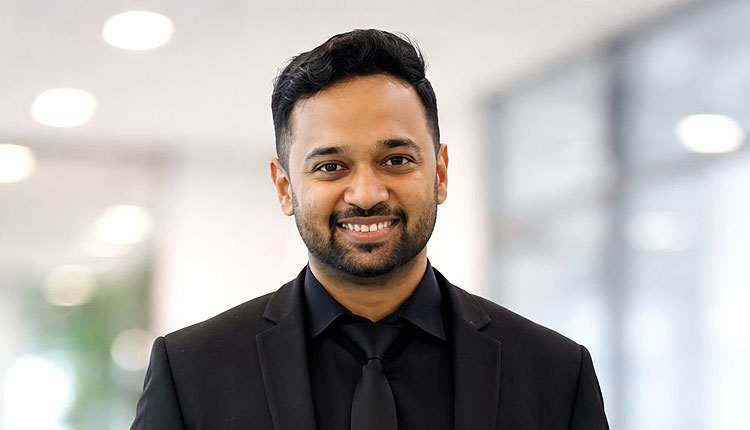

As the pharmaceutical industry accelerates its digital transformation journey, the role of the CIO and CTO is evolving from technology custodian to business strategist. In this exclusive conversation, Tushar Zade, Chief Transformation Officer at Granules India, shares his perspective on building AI-ready enterprises, strengthening supply chain resilience, modernising manufacturing, and why the next generation of technology leaders must think beyond IT to drive measurable business outcomes. From data-first transformation to autonomous pharma operations, he outlines a vision for the future where technology, talent, and execution converge to create lasting competitive advantage.
When you begin your day, what’s the first signal that tells you whether operations across plants, supply chains, and technology systems are running as expected?
Honestly, the first signal is silence. If my phone isn’t buzzing with escalations from plant operations or supply chain teams, the systems we’ve put in place are holding. But I’ve learned not to trust silence blindly. Before my feet hit the floor, I scan three things: OTIF-are we delivering on time, in full; OEE-are the constraint machines running at the throughput we’ve promised; and buffer health-are raw material and packing material inventories in the green zone, or drifting into red? In pharma, the supply chain is the heartbeat of the business. If the buffers are healthy and the dispatch pipeline is flowing, I know the engine is running. When it’s not, I know exactly where to intervene before it becomes a customer problem. The warning system-built on data, not instinct-is what separates a reactive organisation from a resilient one.
Before the first meeting starts, which business or operational metrics give you the clearest picture of performance?
I look at a layered set of metrics-not just the financials, but also the operational leading indicators that tell me where the financials are headed. At the enterprise level, it’s PAT, free cash flow, and the business development pipeline. These tell me whether we’re growing profitably or simply growing. At the operational level, it’s OBE, yield, dispensing-to-dispatch turnaround time, and quality metrics, particularly OOS/OOT rates and deviation closure timelines. At the transformation level, I track project milestone completion, adoption rates of digital tools, and the maturity of our MES/LIMS backbone. The trick isn’t having metrics-every pharma company has those. The trick is having one enterprise view that connects the shop floor to the boardroom, where a dip in compression OEE at 6 AM shows up as a delivery risk by noon. That’s the ambition: a single nervous system for the entire organisation.
What transformation initiative is commanding the most attention today?
If you ask any pharma CXO today, the answer will converge on one theme: end-to-end supply chain reliability. The industry has woken up to the fact that you can have the best molecules in the world, but if you can’t deliver them on time and consistently, you’re losing to competitors, regulators, and patients. The ambition across the industry is bold: achieving best-in-class OTIF levels of 95%+, reducing working capital locked in inventory, and cutting cycle times by 30–50%. But this isn’t just a supply chain project. It’s a mindset shift from departmental optimisation to enterprise flow. It requires manufacturing, quality, procurement, and planning to operate as one system, not four silos. In parallel, the smartest companies are investing in building a Transformation Office-not as a staff function, but as an execution engine. They’re hiring business consultants from top firms, AI engineers from premier institutions, and program managers who can bridge strategy and execution. You can’t transform a company with a PowerPoint deck. You need a team that can walk into a plant, diagnose the problem, design the solution, and stay until the results show up in the P&L.
Where can AI create the biggest impact in pharma operations?
Three areas stand out. The first is the Golden Batch. In pharma, a single batch failure can cost lakhs and trigger weeks of investigation. AI can predict OOS/OOT events before they happen by analysing process parameters in real time. Industry pilots have demonstrated up to a 30% reduction in deviations. That’s not just cost savings, it’s fewer regulatory risks and faster batch release. The second is AI-assisted QualOps. Quality teams across the industry spend thousands of hours writing SOPs and investigating deviations. AI agents that draft SOPs by learning from existing documentation, harmonise them across sites, and assist in root-cause analysis are already turning hour-long tasks into minute-long ones. The third is autonomous supply chain optimisation through AI-powered demand sensing, dynamic buffer management, and intelligent procurement. Instead of humans manually adjusting safety stocks, the system detects shifts in consumption patterns and recalibrates automatically. The real unlock, though, is a unified AI platform, not twenty point solutions from twenty vendors, each with its own architecture and data model. One platform, one data layer, many agents. That’s the only way to scale AI in a regulated environment without creating a compliance nightmare.
How important are informal conversations in shaping technology and operational decisions?
Some of the most consequential decisions I’ve been part of started over a cup of chai, not a conference call. When you sit with a plant operator during lunch and hear him say, “Sir, this changeover takes four hours because we’re waiting for QC clearance that nobody tracks,” that’s a transformation use case no consulting framework will surface. I actively carve out time for gemba walks, going to the shop floor, the warehouse, and the QC lab, not to audit, but to listen. The best ideas don’t emerge from boardrooms. They emerge when hierarchy takes a back seat and curiosity takes the front. Transformation is ultimately a people business. Technology is the enabler. Culture is the accelerator. And culture gets shaped in corridors, not committees.
What defines a successful technology leader today?
A successful technology leader today is someone who has stopped being a technology leader. Let me explain. The era of the CIO who runs servers and manages ERP tickets is over. The leaders who are winning today think like business CEOs who happen to understand technology deeply. They speak the language of EBITDA, not just ETL. They obsess over customer delivery, not just system uptime. They build products, not projects. The best leaders demonstrate strategic clarity by drawing a straight line from a technology investment to a business outcome. They show execution rigour by delivering against roadmaps and tracking every sprint, milestone, and benefit. They possess talent magnetism by attracting people smarter than themselves and creating an environment where those people do their best work. In pharma specifically, you need a fourth trait: regulatory intuition. You can’t deploy AI in a GMP environment the way you would in e-commerce. Every model, automation, and data pipeline must be validated, auditable, and compliant. The leaders who get this balance right will define the next decade.
What’s the toughest decision you’ve made under pressure?
Early in my career as a transformation leader, I faced a situation where the organisation was under intense pressure to digitise quickly. Regulatory scrutiny, competitive pressure, and board expectations all converged at once. The toughest call was to slow down and sequence properly. I told the leadership team, “We can digitise batch records in three months, or we can digitise them right in six months. If we do it in three, we’ll have a digital system with the same broken processes underneath. If we do it in six, we’ll have redesigned processes that are digital-native.” That decision required conviction because the clock was ticking. But transformation done under panic becomes automation of chaos. The right answer was to fix the process first and then digitise it, not the other way around. That principle has guided every initiative since.
Which strategic priority follows you beyond office hours?
Talent. Full stop. Building a world-class transformation team in a pharma company that’s traditionally been operations-focused is the single hardest challenge any CTO faces. You need business consultants who understand manufacturing, AI engineers who respect regulatory constraints, and programme managers who can translate a strategy slide into plant-floor reality. The challenge isn’t finding smart people. It’s finding smart people who can bridge the gap between a consulting deck and a shop-floor changeover. Someone who can design a buffer-stock algorithm in the morning and convince a plant head to adopt it by evening. That combination of strategic thinking, technical depth, and execution grit is incredibly rare, and it’s what keeps me up at night. Because ultimately, transformation is not a technology problem. It’s a capability problem. The company that builds the best team wins.
Which technology will most reshape pharma manufacturing over the next few years?
Agentic AI, and it’s not even close. We’ve moved past the era of dashboards and descriptive analytics. The next wave is AI agents that don’t just show you what happened; they act. Imagine an AI agent that monitors your deviation pipeline, drafts the investigation report, identifies the root cause from historical patterns, and recommends CAPAs, all before your quality team walks in on Monday morning. Combine that with digital twins, virtual replicas of your manufacturing lines that allow you to simulate process changes, predict yield outcomes, and optimise parameters without touching a single machine, and you have the foundation of a lights-out pharmaceutical plant. I genuinely believe the first company to build a fully autonomous pharma manufacturing facility, one that runs with minimal human intervention, predicts failures, optimises processes, and delivers medicines reliably, will redefine the industry. The question isn’t whether it will happen. It’s who will build it first.
If you could reinvent one aspect of pharma technology, what would it be?
The data architecture. Pharma has spent billions on technology like ERP, MES, LIMS, QMS, CRM and yet most organisations still can’t answer a simple question like, “What was the true cost of producing Batch X, including the quality investigation that followed?” The reason is simple: the data lives in multiple systems that don’t talk to each other. If I could start from scratch, I’d build a unified data platform from Day One, one that treats data as a first-class enterprise asset, not a by-product of transactions. A platform where every batch record, every deviation, every customer order, and every procurement decision flows into a single, governed, AI-ready data lake. McKinsey estimates that AI represents $2.6-4.4 trillion of potential value globally, yet 80–87% of big data projects fail to produce sustainable solutions. The bottleneck isn’t AI capability. It’s data readiness. Fix the foundation, and everything else, predictive quality, autonomous supply chains, and AI-assisted R&D, becomes possible. The pharma company that cracks this, that builds the data backbone before it builds the AI brain, will be the one that leapfrogs from being a cost-efficient manufacturer to an AI-native pharma enterprise. That’s the transformation I’m leading.
