

Building India’s first homegrown ODM: Inside Rapidise’s $100-billion bet

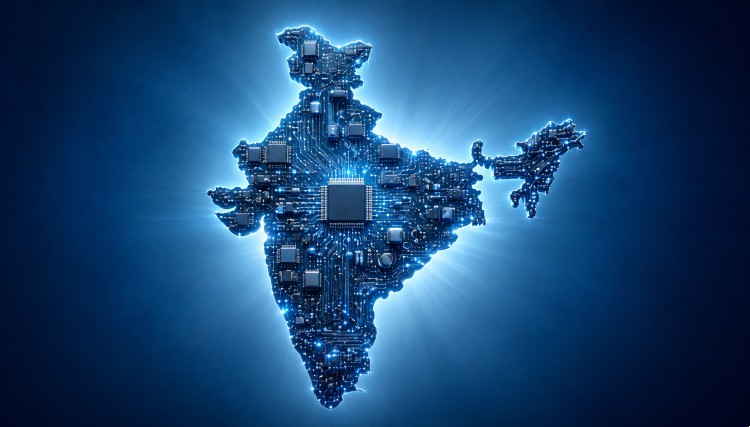

India buys an enormous amount of the electronics it uses. The country ranks among the second- or third-largest importers of electronics globally — a striking position for an economy that is simultaneously pouring billions into semiconductor fabs, display plants, and component manufacturing under its PLI and design-linked incentive schemes. Chips are starting to get made here. Displays and camera modules are starting to get made here. But almost nothing exists yet to take those components and turn them into finished, exportable products at scale, under one roof, from concept to shipped unit.
 That’s the gap Brijesh Kamani set out to close when he founded Rapidise a year and a half ago. “There are a lot of product companies now emerging in India,” he says. “Previously there were a lot of service companies — TCS and other players. If you see other countries, the product companies closely work with the ODM ecosystem… that ecosystem was missing in India. There’s a big gap over there.”
The timing wasn’t accidental. As India’s semiconductor fabs and plants “pop up,” Kamani saw a structural problem hiding in plain sight: a chip on its own is not a product. “Semicon can make a chip, but who will build the product?” he asks. “It’s typically an ODM that takes control from the semicon. They stay close to that, they build the products, and they facilitate that.” Without that ODM layer, India risks ending up with world-class silicon and no domestic way to turn it into finished goods — while continuing to import the very categories of products its own supply chain could support.
Why “ODM” Is Not Just Another Acronym
Kamani is precise — almost pedantic — about what separates an Original Design Manufacturer from the categories India already has plenty of. In his framing, the electronics manufacturing landscape breaks into distinct tiers: PES (product engineering services — the consulting-heavy play of firms like Tata Elxsi and Wipro), EMS (electronics manufacturing services, the assembly-line domain of players like Syrma SGS and Dixon), and CM (contract manufacturers, who add box-build and mechanical integration on top of EMS). “Then comes ODM,” he says. “ODM is a combination of all three capabilities. That’s where our differentiator is.”
Combining them under one roof, he argues, is precisely why so few companies have attempted it. “Bringing two experiences — one is an engineering experience of consulting, one is a manufacturing experience — and building that whole piece under the same umbrella, that’s one challenge,” he explains. “Mindset for the consulting business people and the organization operation is completely different than the labor operations and the manufacturing operations… The manufacturing automation, digital transformation, digital twins — this initiative is completely different than what you are doing here.” Layer on the difficulty of retaining hardcore R&D talent and the capital appetite needed to fund manufacturing expansion, and Kamani is candid: “All three things together can only make this journey to be a successful one.”
The Discipline of Saying No
Ask Kamani what actually produced Rapidise’s velocity — Rs. 500 crore in year one, operational break-even, and a target of doubling revenue every 12 months — and his answer isn’t about a clever product. It’s about restraint. “There were a lot of decisions that we have taken to say no,” he says. “There was a lot of opportunity — building a product, building modules, building some part of the ecosystem. There were a lot of options. We decided clearly that where we wanted to go… a single bundled ODM umbrella, and we wanted to expand horizontally.”
That discipline extended to geography. Rather than spreading manufacturing across India’s traditional industrial hubs, Rapidise deliberately concentrated its plants in the National Capital Region. “We set it up in the North because we see a great value for the labor availability, [and a] great established ecosystem from a long time for electronics manufacturing,” Kamani says. Today, Rapidise runs one plant in Manesar’s Sector 3 — “very close to Honda’s HQ” — with expansion underway in Sector 8, Manesar and Greater Noida. The rationale is talent density, not just proximity to customers: “I am keeping my strong best talents in the one city only, so that any plant needs any support, I can build my corporate plant head, I can build my individual plant head, so that I can leverage the know-how that is being created within the same city.”
The same logic — go where the talent already lives — shaped Rapidise’s R&D footprint, which now spans Ahmedabad, Vadodara, Mumbai, Delhi-Gurgaon, Chennai, and Bengaluru. “Chip design, VLSI engineers are practically in two locations only, Bangalore and Ahmedabad,” Kamani notes. “Embedded software engineers, it is very easy to retain in Ahmedabad.” Across roughly 100 customers today, Rapidise runs both pure design engagements and full design-plus-manufacturing ODM programs.
From Tier-2 Supplier to a Seat at 13 OEM Tables
Rapidise’s entry point into automotive was modest — a Tier-2 role delivering into a Tier-1 supplier in year one. Eighteen months later, the trajectory has flipped. “Right now, there are a total of 13 OEMs that are in discussion with us,” Kamani says. “One OE from India is already into our ODM program now… So our journey of ODM emerging and Tier-1 emerging are happening at the same time.”
What convinced automotive and Japanese customers to trust an 18-month-old Indian company with production-line-grade programs? Kamani points to the shop floor itself. Rapidise’s plants run on Fuji machinery from Japan, class 6 and class 8 cleanrooms for camera-module assembly, and an in-house testing organisation of roughly 25 engineers so that, as Kamani puts it, “we have no dependency on any external vendors for even the testing ecosystem.” Every stage — from pre-dispatch inspection of incoming material to end-of-line functional testing — is backed by what he calls “Industry 5.0” practices and AI-based quality control. “Every week we have at least one Japanese customer’s visit going on for the plant audit,” he says. “They are getting amazed with the capability and facility what we have built.”
Homegrown AI, Built for a Fraction of the Cost
Perhaps the most striking claim in Rapidise’s playbook is how it approaches automation itself: build it, don’t buy it. “If I go and buy the machine, it is 1 crore. I built it in 10 lakh rupees,” Kamani says of the company’s in-house end-of-line and functional testers — roughly a tenth of the commercial price. At nearly every assembly station, homegrown AI cameras run edge-based “go/no-go” inspection algorithms — covering solder-joint quality via X-ray and optical inspection, PCBA-level checks, and full end-of-line functional testing. “This algorithm is day by day getting improved,” he says. “It’s a state-of-the-art implementation. Nobody, none of the factories, you can see this in India.”
Kamani is clear that this isn’t a product Rapidise intends to sell — it’s a moat. “If a company is giving the business to us in our factory, then we will use it for them. We don’t want to sell this part. It is to retain customers.” He credits the approach with driving rejection rates close to zero, and sees the absence of legacy infrastructure as a genuine edge over larger incumbents: unlike established players retrofitting AI onto decades-old lines, Rapidise designed its factories around AI-based inspection from day one.
A $100 Billion Market Hiding in Plain Sight
Kamani frames the opportunity in front of Rapidise in blunt terms. “The total addressable market [for ODM in India] is $100 billion,” he says. That number sits alongside a second, equally telling one: India’s status as one of the world’s two or three largest electronics importers. Put together, they describe the same opportunity from opposite ends — a domestic market currently sending a huge share of its electronics spend abroad, sitting on top of a manufacturing and design capability base that, in Kamani’s view, is finally mature enough to compete for that spend domestically. “So opportunity is huge,” he says.
“If I can capture some percentage of it, you can just imagine — it is one digit, two digit billion dollar.”
The company’s roadmap unfolds in three distinct phases. The first three years are about establishing Rapidise as “a valued ODM in the market” and scaling revenue horizontally across automotive, security and surveillance, and networking and computing — the last of which already has Rapidise supplying switches and routers to two of India’s largest telecom operators. Years four through six shift the focus toward bottom-line strategic accounts and geographic risk management, deepening relationships in Japan, Europe, and the US. From year six onward, the ambition changes shape entirely: Rapidise wants to own design IP, mechanical IP, hardware IP, systems-on-modules, IoT-connected modules, and proprietary AI models — shifting, in Kamani’s words, from “a manufacturing value-addition play” to “an IP play.”
Robotics and drones sit further out on the horizon — five to seven years, by Kamani’s estimate — while the near-term vertical focus stays fixed on vision-based products in automotive, security, and surveillance, where Rapidise can embed its own AI models directly into the hardware it builds.
The gaps
Kamani is equally direct about what’s still missing for India to convert this import-heavy demand into domestic production at speed. He notes that a typical ODM sampling cycle — from first design to first sample delivered to a customer — runs about two years industry-wide; Rapidise has compressed that to three months, but argues that faster customs and logistics policy would let the broader ecosystem move at a comparable pace.
He’s equally candid about talent. Closing India’s ODM skills gap, he argues, requires closer industry-academia collaboration — potentially through university-based centres of excellence — rather than companies each building training pipelines in isolation. On policy more broadly, Kamani points to component-localisation incentives under the PLI and design-linked incentive schemes as the right direction, provided they’re paired with faster trade clearances.
For all the scale of Kamani’s ambition — a self-described aspiration to be the “global number one ODM out of India,” with operations already spanning India, the US, Europe, and Japan, plus a supply-chain team based abroad for pre-dispatch inspection — the story he tells is disciplined rather than sprawling: pick one model nobody has fully built in India, concentrate talent and manufacturing where it already exists, build automation in-house rather than buying it off the shelf, and let revenue follow. Eighteen months in, against a $100-billion domestic market and an import bill that keeps climbing, the numbers suggest the bet is paying off.