

Industrial AI can’t afford to be wrong, says Dassault Systèmes’ Elisa Prisner


In most corners of the enterprise, an AI that is usually right is a triumph. A draft email that needs a tweak, a summary that misses a nuance, a forecast that lands close enough: these are acceptable margins of error.
Now put that same technology inside an aircraft wing, a drug trial or a car’s braking system, and the arithmetic changes. The error is no longer a rewrite. It is a recall, a regulator’s inquiry, or worse.
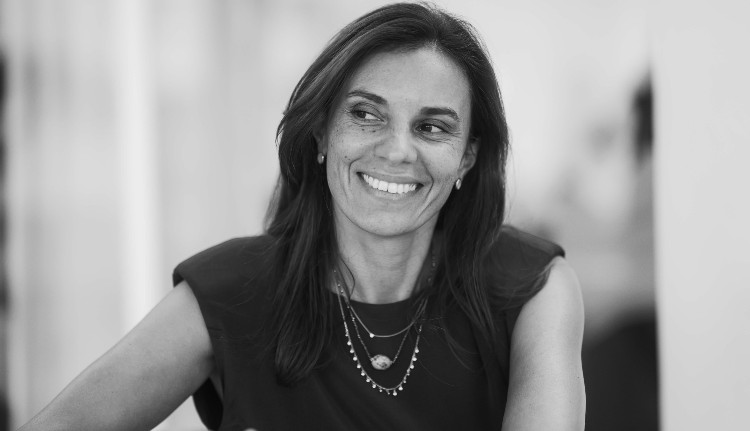
That gap between “impressive” and “certifiable” sits at the heart of a conversation with Elisa Prisner, Executive Vice President for Strategy, Industry, Marketing and Transformation at Dassault Systèmes. Speaking to us, Prisner set out why the French software group believes the next phase of enterprise AI will be won not by whoever has the biggest language model, but by whoever can explain why a machine did what it did.
An aerospace engineer in the virtual world
Prisner’s own path mirrors the argument. She joined Dassault Systèmes almost 13 years ago from the aerospace industry, a world where everything must be certified, and she describes discovering the virtual world as a revelation about how to bridge the virtual and the real.
That bridge has been the company’s business for four decades. Dassault Systèmes grew from 3D design into product lifecycle management and then into virtual twins, which now extend beyond machines to living systems such as the human body. Prisner insists a virtual twin is not just a digital replica. Its value, she says, lies in understanding how things, life and infrastructure behave, and that understanding is the foundation on which the company now builds AI.
The strategy has a name: 3D UNIV+RSES. It extends the company’s 3DEXPERIENCE platform into generative AI and industry world models built on science and physics, accessed through virtual companions named Aura for business, Leo for engineering and Marie for science. The company has also expanded its partnership with NVIDIA to combine its virtual twin technology with NVIDIA’s AI infrastructure and models, in order to build these industry world models.
“An approximation is still a guess”
Prisner’s sharpest line is aimed at the wider AI market. Tech providers everywhere talk about industrial AI, she says, but for Dassault Systèmes it means trusted scientific models as the foundation, built on four decades of industry knowledge. Large language models may perform well in industry, she concedes, yet an approximation is still a guess. In industries where errors can cost lives, she argues, there is no room for approximations.
She makes the point vivid with a robot on a factory floor. AI and world models can make it do things, but a standard robot does not understand why it behaves as it does. Because of Dassault’s grounding in physics, science and industry standards, Prisner argues, the company can explain the “why”, and help customers confront, defend and trace their models before the authorities. “It all comes back to trust,” she says.
It is a notable position at a moment when much of the industry is racing to bolt agents onto every workflow. Prisner is, in effect, arguing that explainability is not a compliance afterthought but the product.
The proof points
The examples she offers are deliberately practical. An Indian drone maker, which she did not name, cut the time to market for a composite component from years to months, enabling a design that had previously been impossible. In aerospace and automotive, she notes, certification and safety make that kind of acceleration valuable only if the models are rooted in virtual twins, industry standards and the customer’s own know-how. Only then, she says, does AI start to prove its return on investment.
She also points to knowledge as an overlooked asset. Much of what makes a plant or a programme work lives in experts’ heads and walks out of the door when they retire. In her telling, AI’s most important job is to capture that know-how in a protected way and spread it across a company, plant or programme, turning knowledge locked in code and people into reusable intelligence.
From aircraft to medicines
Prisner describes what the company calls the generative economy as an end-to-end lifecycle view that joins the experience economy with the sustainable one, and draws inspiration from how nature regenerates. Core industries such as aerospace and defence remain central, she stresses, but the company is diversifying into consumer sectors and strengthening life sciences and healthcare.
The clearest sign came this summer. Prisner referred to a recent global acquisition that completes the company’s end-to-end vision in life sciences, which appears to be the ArisGlobal deal announced in July. Dassault Systèmes agreed to pay roughly US$1.8 billion in cash, with up to a further US$200 million tied to AI-related revenue milestones, and expects to close in the second half of 2026. ArisGlobal serves more than 200 customers, including half of the world’s top 50 biopharmaceutical companies. The company expects the deal to link molecular research, clinical development, manufacturing, regulatory activity and real-world patient outcomes in a continuous evidence loop.
Strengthen AI Platform for Life Sciences
The logic follows Prisner’s theme: moving from drug discovery to manufacturing, grounded in real-world data. She sees close parallels in food and nutrition, where traceability, safety and the effect on human health pose similar questions to those in pharma.
Asked whether the company’s real defence is its decades of data or its models, Prisner declines to choose. Scientific models, innovation and trust, she says, are the keywords, along with an ecosystem built through co-creation and carefully chosen partners. The company’s industry world model, she adds, is “a protected jewel and not just a concept.”
She is notably open about how the platform is evolving. Dassault has been rebuilding it to be AI-native, keeping control of the vertical stack from infrastructure to virtual twins and companions, while opening it horizontally to third-party applications and other agents.
Building the workforce of the virtual twin era
India features prominently in Prisner’s thinking. She calls the country’s talent massive and says Dassault will keep investing. The company is working with state governments to build centres of excellence, one recently opened in Guwahati, Assam, with further initiatives in Karnataka, Telangana and Tamil Nadu.
The aim is to give engineering students an industrial, real-world environment they cannot find in college. Prisner says the company plans to extend the idea to individual corporations, though it still has to choose its priority segments and customers.
The talent pipeline runs through a 16-year-old student competition that began as a small initiative in India. It has trained more than 75,000 students on Dassault’s platform, provides SolidWorks licences and projects aligned with the UN Sustainable Development Goals, and now spans more than 60 countries. Winners of the Indian finale travel to the company’s global 3DEXPERIENCE World event in the United States. One student, Prisner says, went from winning an entrepreneurship initiative for younger pupils to seeing his start-up incubated in the company’s 3DEXPERIENCE Labs.
Intelligence on many bodies
Looking ahead, Prisner sketches a shift in where value sits. The economy moved from products to mass production to experiences, and cars now compete increasingly on software. With AI-native players entering the market, she asks whether the physical object will hold the most value, or whether the intelligence model that can be placed on many different bodies will. Virtual twins, she suggests, make it possible to embed intelligence in physical products, and things are already moving in that direction.
Prisner’s thoughts deserve to be taken seriously by anyone deploying AI where mistakes are physical. As agents take on more consequential work, the question regulators, boards and customers will ask is unlikely to be whether the system was clever. It will be whether the organisation can show why it acted as it did.
Prisner’s answer is that the “why” has to be built in from the start, in physics rather than probability. Whether her company can turn that conviction into a lasting commercial advantage is the real test now facing Dassault Systèmes.