


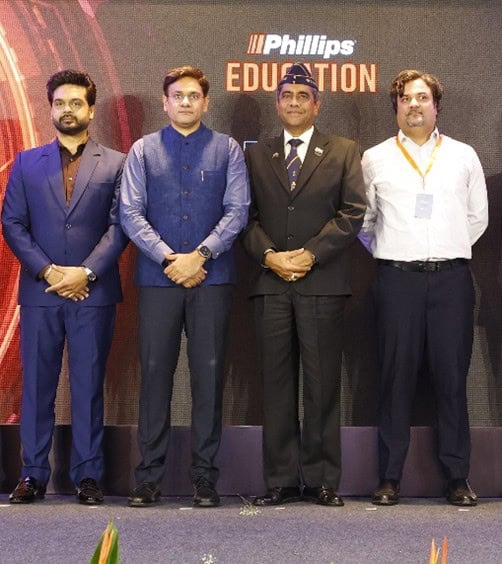

When we think of India’s technological ambitions, such as $64 billion in semiconductors, $70 billion in aerospace and defence, and 500 GW of renewable energy, the conversation often centres on capital, infrastructure, and policy. Rarely does it spotlight the workforce that is enabling this, including the women who are among the contributors. At the G.R.O.W.T.H. Dialogue in Mumbai, hosted by Phillips Education and Arthan, inclusion emerged as a central theme, with leaders from government, academia, and industry highlighting its importance.
Shri Saurabh Bahuguna, Hon’ble Minister for Skill Development & Employment, Uttarakhand, who attended the dialogue, underlined the need for greater representation of women in future-ready industries. He stated, “India’s demographic dividend is our greatest strength, but it will only yield results if we channel it through the right skilling pathways. Women, youth, and underserved communities must be integral to this journey, equipped with practical skills that make them employable and future-ready.”
The hard reality is that women are often under-represented in fields such as artificial intelligence, semiconductors, and defence. However, programmes like Phillips Education’s Skilling for Inclusion initiatives are changing this perception by providing women and under-represented groups with practical, employable training. These kinds of initiatives are not only leading to an increase in employability but also developing leadership in traditionally male-dominated industries by providing them with skills that growing sectors need.
Rakshit Kejriwal, Global President of Phillips Education, added, “Equipping women with job-ready skills in high-growth industries is not just a matter of equity, but it is strategic for India’s growth. When women lead in sectors like renewables, AI, and advanced manufacturing, they drive innovation, productivity, and inclusive economic impact across the nation.”
Through initiatives like Centres of Excellence, industry-academia partnerships, and inclusion-focused skilling programmes, Phillips Education and Arthan are attempting to bridge this gap, ensuring that young people, women, and underserved communities are ready to take on roles that directly impact India’s industrial ambitions.
The discussion revealed a more significant truth: without women actively engaging in India’s industrial and technological workforce, the country cannot meet its trillion-dollar targets. Their inclusion has become a strategic necessity in the current times. Women are far more than just stakeholders in India’s rapidly evolving future; they are entrepreneurs, trailblazers, and pioneers in a workforce that will shape the country’s status as a global leader.
