

Physical AI will be the single biggest disruptor in human history: Sukant Acharya, HCLTech


AI is no longer confined to cloud servers and algorithms; it has stepped firmly into the physical world. From smart factories and autonomous logistics hubs to intelligent mining equipment and predictive maintenance in energy systems, AI is now touching the tangible, sensory-rich environments we inhabit. And as this happens, the demand for ethics, transparency, and accountability has never been higher.
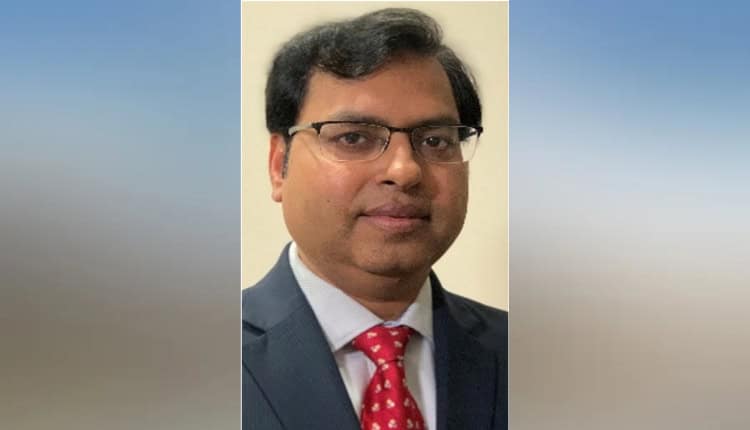
“AI is no longer just a technological advancement, it is a transformative force reshaping industries, human experiences, and global systems,” says Sukant Acharya, Head of Physical AI Practice at HCLTech during a recent conversation with Express Computer. “As its footprint grows, so does the demand for transparency, fairness, and accountability in how AI is developed and deployed.”
Acharya reveals that at the heart of HCLTech’s strategy lies a Responsible AI (RAI) framework built on five pillars, fairness, security, privacy, transparency, and accountability. This isn’t just a checklist; it’s a guiding principle embedded into every AI system the company builds. The framework ensures that AI not only complies with global regulations but also meets the evolving expectations of society.
RAI becomes even more critical in what Acharya calls “physical AI environments,” sectors like manufacturing, logistics, energy, transportation, construction, and public safety, where algorithmic decisions can directly impact human safety and operational integrity. “In these sectors, the stakes are significantly higher,” he notes. “A flawed algorithm isn’t just a data issue; it can cause safety incidents, supply chain disruptions, or reputational damage.”
By embedding these ethical principles into its physical AI deployments, HCLTech aims to help organisations minimise risk while boosting resilience, accuracy, and performance at scale.
Where AI meets the real world
HCLTech’s Physical AI and AIoT division has been quietly building an impressive portfolio of use cases that demonstrate how intelligence at the edge can deliver measurable business impact.
One of its standout projects involved a U.S. energy provider, where the company used geospatial AI to reduce utility pole crashes by 80%. In another case, HCLTech’s VisionX platform analysed live video feeds from thousands of industrial cameras, enhancing workplace safety and operational efficiency in complex environments.
The company also collaborated with a global manufacturer of construction and mining equipment to integrate AI directly into its products. “We used computer vision and data science to predict, analyse, and adjust usage parameters like blade angles and wheel movement,” explains Acharya. “The result was improved asset integrity, better performance, and higher-quality outputs.”
Acharya highlights the company’s suite of innovations, including SmarTwin, InsightGuard, and AiVIS, exemplifies how physical AI moves beyond simple automation. Specifically, SmarTwin creates digital replicas of factories, a capability that reduces costs and accelerates production cycles for both new and existing facilities. Meanwhile, InsightGuard, an industrial AI platform, reduces operational downtime by integrating predictive maintenance, anomaly detection, and GenAI-powered diagnostics. Finally, AiVIS, an AI-powered visual inspection tool, revolutionises quality control in manufacturing by delivering inspections 80% faster with 50% higher accuracy and a 45% reduction in scrap.
“These solutions go beyond traditional cloud-based AI,” he emphasises. “They prove that edge AI can drive both operational resilience and business growth.”
An engineering-first philosophy
While many global players approach AI from a software or data-centric lens, HCLTech takes pride in its engineering-first mindset. This philosophy, Acharya explains, is what truly differentiates the company in a crowded AI marketplace.
“What sets HCLTech apart is our ability to bridge both digital and physical worlds,” he says. “We bring full-stack integration, from ET-OT-IT convergence to data intelligence, and from AI-ready chip design to edge and cloud compute.”
This systems-thinking approach, he adds, enables HCLTech to infuse AI as an intrinsic layer into products, platforms, and processes, not as an afterthought, but as a core architectural element that makes systems smarter, more resilient, and scalable by design.
From efficiency to value creation
Looking ahead, Acharya sees the convergence of AI, IoT, and intelligent edge systems as the defining force of the next industrial era.
“We believe Physical AI will be the single biggest disruptor in human history,” he declares. “As AI becomes embedded in every product we use, service we consume, and environment we interact with, it will no longer be a layer on top of the enterprise; it will be the enterprise.”
This, he explains, will lead to the rise of AI-native organisations, businesses where every process, product, and decision is powered by self-learning, adaptive systems. “It’s not just about automation or intelligence at the edge,” he continues. “It’s about reimagining value creation at its core.”
Acharya pointed out that HCLTech is positioning itself at the frontier of this transformation, helping enterprises transition from efficiency-driven AI adoption to outcome-based and revenue-generating business models.
“In the coming years,” Acharya concludes, “Physical AI will become the foundation of a smarter, safer, and more resilient world, and those who embrace it early will lead the next wave of global innovation.”
