

Vertiv expects powering up for AI, digital twins and adaptive liquid cooling to shape data center design and operations

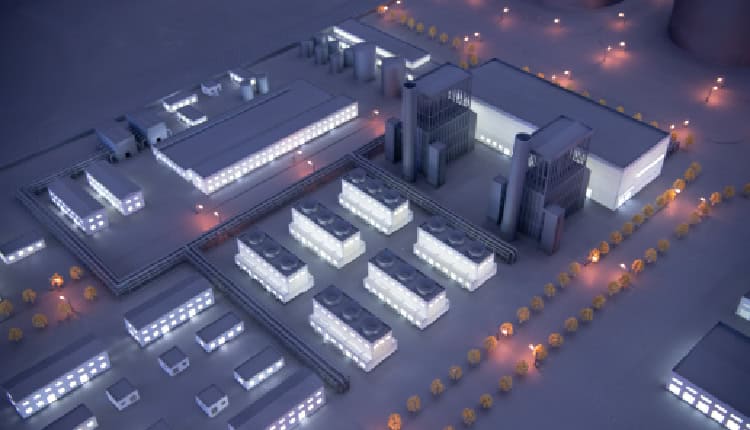

Vertiv expects the rapid rise of artificial intelligence, digital twins and adaptive liquid cooling to fundamentally transform how data centres are designed, built and operated, as the industry prepares for unprecedented levels of scale and density.
In its latest Vertiv Frontiers report, the company highlights how data centre innovation is being reshaped by macro forces such as extreme densification, gigawatt-scale deployments and the emergence of the data centre as a “unit of compute”. These forces, Vertiv says, are being driven largely by the requirements of AI factories and high-performance computing workloads.
“The data centre industry is rapidly evolving how it designs, builds, operates and services facilities in response to the density and speed of deployment demanded by AI,” said Scott Armul. “Cross-technology forces such as extreme densification are driving transformative trends including higher-voltage DC power architectures and advanced liquid cooling, both of which are essential to delivering the gigawatt-scale growth required for AI innovation.”
Four macro forces shaping the future
According to Vertiv, today’s data centre landscape is being influenced by four interconnected forces:
– Extreme densification, accelerated by AI and HPC workloads
– Gigawatt scaling at speed, as facilities are deployed faster and at unprecedented size-
– Data centres as a unit of compute, requiring infrastructure to be designed and operated as a single integrated system
– Silicon diversification, with infrastructure needing to support a widening range of chips and compute architectures
These forces are translating into five major technology trends that will define next-generation data centres.
Five trends redefining data centres
- Powering up for AI
Traditional hybrid AC/DC power architectures are increasingly strained by rising rack densities. Vertiv points to a shift towards higher-voltage DC power, which can reduce conversion stages, improve efficiency and support on-site generation and microgrids—capabilities that will be critical as AI workloads scale. - Distributed AI environments
While hyperscale AI data centres continue to grow, Vertiv notes that many organisations—particularly in regulated sectors such as finance, defence and healthcare—will rely on private or hybrid AI deployments. Flexible, high-density power and liquid cooling systems will be essential to support both new builds and retrofitted facilities. - Energy autonomy accelerates
Power availability challenges are pushing operators beyond traditional backup generation towards extended on-site energy strategies. Concepts such as “Bring Your Own Power (and Cooling)” are expected to become integral to AI data centre planning, enabling greater resilience and independence from grid constraints. - Digital twin-driven design and operations
Digital twin technology is emerging as a key enabler of faster AI deployments. By virtually modelling data centres and integrating IT and infrastructure components as prefabricated units, operators can reduce deployment timelines and cut “time-to-token” by up to 50%, according to Vertiv. - Adaptive, resilient liquid cooling
Liquid cooling is becoming mission-critical for AI workloads, and Vertiv expects AI itself to play a role in optimising these systems. By combining AI with advanced monitoring and control, liquid cooling can become more predictive, resilient and efficient—improving uptime for high-value hardware and workloads.
Preparing for the AI era
Vertiv concludes that these trends will be central to enabling the next wave of AI innovation, as data centres evolve from static facilities into highly integrated, scalable compute platforms. With operations spanning more than 130 countries, the company says its integrated portfolio of power, thermal and IT infrastructure solutions is designed to help customers navigate this increasingly complex digital landscape and support continuous, AI-driven growth.