

Why digital governance is quietly redefining modern trusteeship

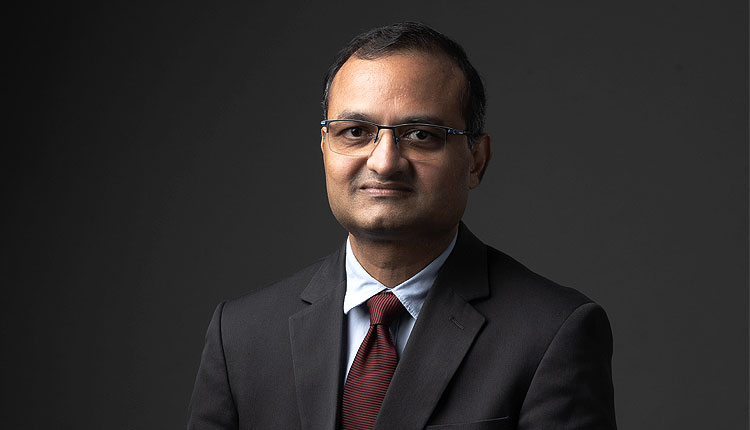

By Rahul Choudhary, MD & CEO, Axis Trustee Services Limited
For many years, trusteeship operated quietly in the background of India’s financial system.
It was seen largely as a documentation-heavy function, a role associated with compliance tracking, monitoring obligations, maintaining records, and ensuring that procedural requirements were met. Much of the work remained invisible unless something went wrong.
That perception is beginning to change.
As India’s financial ecosystem becomes larger, faster and more interconnected, the expectations from trustees have evolved significantly. Transactions today are more complex. Investors are more aware. Regulatory scrutiny has become sharper. Information moves instantly, and reputational consequences now travel even faster than financial ones.
In such an environment, governance can no longer remain a periodic exercise carried out through fragmented systems, scattered communication trails, and reactive processes. Trusteeship itself is slowly moving from passive oversight to continuous visibility.
That shift may quietly become one of the more important governance transitions taking place within India’s financial sector.
SEBI’s governance push is changing expectations
The pressure behind this change is not difficult to understand.
Over the last few years, regulators, including the Securities and Exchange Board of India (SEBI), have consistently pushed the financial ecosystem towards stronger accountability, faster disclosures, improved transparency, and more structured compliance frameworks. Alongside this, there has also been increasing emphasis on operational efficiency and ease of doing business (EODB).
This combination is important.
The expectation today is not merely tighter governance. It is smarter governance. Institutions are increasingly expected to improve monitoring standards while simultaneously reducing operational friction.
That is changing the way trustee organisations themselves think about technology, compliance, and oversight.
Historically, many governance workflows across the financial sector depended heavily on emails, spreadsheets, manual follow-ups, and disconnected operational systems. Those models may have worked in a smaller ecosystem. They become increasingly difficult to sustain in a market where transactions are data-intensive, timelines are compressed and stakeholders expect real-time visibility.
The issue is not only inefficiency. Fragmented systems often create fragmented accountability.
A delayed escalation. A missed covenant trigger. An incomplete audit trail. A communication dependency sitting with one individual. These are no longer minor operational gaps. In a tightly regulated financial environment, they can quickly become governance concerns.
From manual monitoring to structured visibility
This is where digital governance systems are beginning to alter the trusteeship landscape.
Across industries, institutions are now investing in more structured monitoring environments that centralise workflows, improve visibility and create stronger process discipline. Trustee platforms are increasingly being designed not merely to store information but to organise governance itself more intelligently.
The benefits are practical rather than theoretical.
Structured digital systems can improve compliance tracking, reduce dependency on manual coordination, strengthen audit readiness, and create clearer escalation frameworks. They can also help institutions respond more efficiently to increasingly complex reporting and monitoring obligations.
Importantly, they also create consistency.
Governance often weakens not because policies are absent, but because execution becomes uneven across processes, teams, or timelines.
Digital workflows help reduce that inconsistency.
This broader transition is also reshaping how trustees engage with issuers, investors, intermediaries and regulatory expectations. The role is becoming more connected, more analytical, and far more operationally visible than before.
Technology in governance cannot become a cosmetic exercise. Financial institutions eventually discover that complicated dashboards alone do not create accountability. Governance systems only become meaningful when they improve judgement, escalation quality, and decision visibility.
The growing influence of AI in governance
This conversation becomes even more relevant when artificial intelligence enters the discussion.
AI and analytics are beginning to influence governance functions within financial services, including trusteeship. Given the sheer volume of documentation, covenant monitoring requirements, transaction records, and compliance data involved, institutions are naturally exploring how intelligent systems can improve efficiency and risk identification.
There are clear advantages.
Analytics-driven systems can assist in identifying unusual operational patterns, detecting early warning signals, accelerating document reviews, and strengthening exception monitoring. In large and complex transaction environments, this can significantly improve response capabilities.
But financial governance is not the same as operational automation.
That distinction deserves far greater attention than it currently receives.
Globally, regulators have increasingly begun discussing the risks associated with excessive dependence on AI within regulated environments. Concerns around explainability, model bias, accountability gaps, and over-automation are no longer theoretical debates. They are governance discussions.
SEBI too has, in various forums and regulatory discussions, highlighted the importance of responsible technology adoption and the need for appropriate safeguards around AI-driven systems.
That caution is both necessary and healthy.
Governance still needs human judgement
Trusteeship ultimately remains a fiduciary responsibility. Accountability cannot be delegated to algorithms. A governance framework may use technology extensively, but judgement, escalation, and ethical responsibility remain deeply human functions.
Technology can support governance.
It cannot become governance itself.
This balance between intelligent systems and human oversight may well define the next phase of financial governance evolution.
Interestingly, the rise of digital governance is also changing the strategic positioning of trusteeship itself.
For many years, governance functions were often viewed as cost centres or regulatory necessities. Increasingly, institutions are beginning to recognise that governance quality directly influences investor confidence, operational resilience, and long-term institutional credibility.
That changes the conversation entirely.
In modern financial ecosystems, trust is no longer created only through financial performance. It is also created through transparency, responsiveness, process integrity, and the ability to demonstrate disciplined oversight.
Trusteeship is becoming a strategic confidence function
As investment products become more sophisticated and transaction structures more layered, the trustee’s role is likely to become even more significant. The industry may gradually move towards a model where trustees are expected not merely to monitor documentation but to provide stronger governance assurance across evolving financial structures.
This will require new capabilities.
Trustee organisations will need stronger technology infrastructure, deeper analytical capabilities, better integrated workflows, and more responsive operating models. At the same time, they will also need experienced professionals capable of applying judgement in situations where data alone may not provide complete answers.
That combination will become critical.
Because governance failures rarely emerge from the absence of information. More often, they emerge from delayed interpretation, weak escalation cultures, or fragmented accountability.
Digital systems can improve visibility, but institutions will still be judged by how they respond when early signals appear.
The quiet shift that may define financial trust
India’s financial sector is entering a phase where scale, speed, and governance are becoming deeply interconnected. The institutions that succeed in this environment are unlikely to be the ones with the most technology alone. They may instead be the ones that manage to combine operational efficiency with disciplined oversight and human accountability.
In that transition, trusteeship itself may quietly emerge as one of the more important confidence frameworks supporting the next phase of financial market growth.
And governance, once treated as a back-office obligation, may increasingly become one of the strongest differentiators of institutional trust.