

CIOs must adopt a venture capital mindset: Deepak Sharma, Board Member, Suryoday Small Finance Bank

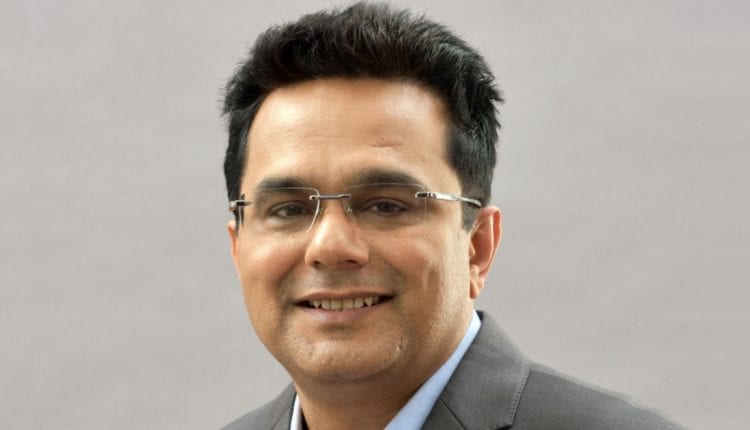

In the age of AI, cyber risk, and digital disruption, CIOs are no longer back-office technocrats—they are strategic power brokers who determine whether enterprises grow, stay relevant, or fade into irrelevance. Few people understand this shift better than Deepak Sharma, Board Member (Independent Director) at Suryoday Small Finance Bank, former President and Chief Digital Officer of Kotak Mahindra Bank, and an advisor to several technology-led businesses.
Speaking at our BFSI conclave, Deepak Sharma drew on his two decades of experience leading large-scale digital transformations to urge CIOs to reimagine their roles, strategies, and engagement with the boardroom.
Living in a VUCA World—and Thriving
The banking and financial services industry is operating in what Deepak calls a perpetual VUCA environment—characterized by volatility, uncertainty, complexity, and ambiguity.
“The only constant is change. Technology, consumer behavior, competitors, even revenue pools—they’re all shifting constantly. The question isn’t whether change is happening but whether you’re enjoying it,” Deepak said.
His advice to CIOs is to adopt a venture capital mindset, one that allows for rapid experimentation, an openness to pivot, and a willingness to abandon projects that do not deliver measurable value. Rather than committing to traditional five-year CAPEX-heavy programs, CIOs should focus on agile, OPEX-driven cycles where success is measured in real-time business outcomes.
The Dual Challenge: Innovate Boldly, Comply Relentlessly
Innovation without compliance is a ticking time bomb, Deepak warned, particularly in regulated industries like banking and insurance.
“Many institutions fail not because they lack innovation but because they underestimate risk and compliance. Regulators are only going to get tougher, especially with data privacy and cybersecurity,” he emphasized.
This duality requires CIOs to not only accelerate digital transformation but also build resilience and governance into every layer of their operations. Technology decisions must consider compliance at the design stage itself, ensuring that the speed of innovation does not compromise institutional stability.
Back to Basics: Architecture Before Glamour
While the industry buzzes with emerging technologies such as Generative AI, Deepak urged leaders to focus on core architectural fundamentals first.
“If your data architecture is flawed, if your APIs and microservices are fragmented, adding new tech is just piling more cost and redundancy,” he said.
Annual architecture audits, legacy system retirements, and deliberate “sunset” strategies for redundant systems are, in his view, just as important as adopting next-generation solutions. This discipline ensures that every technology layer supports long-term agility rather than creating new operational complexity.
Agentic AI: From Support to Autonomous Decision-Making
While Generative AI has dominated headlines, Deepak believes the real transformation lies in the rise of Agentic AI—intelligent models designed to operate autonomously, make contextual decisions, and continuously learn without human intervention. According to him, this is not just an incremental shift but an inflection point in how businesses will be run.
“Today, AI is still seen as a co-pilot, a system that helps humans work faster or smarter. But Agentic AI is fundamentally different. It is designed to own entire processes, make informed decisions on its own, and get better with every iteration. Humans will soon wrap around AI agents, rather than AI acting as a helper to humans,” Deepak observed.
He illustrated the concept with vivid examples. Imagine a contact center where instead of training thousands of agents across languages and scripts, one AI agent could handle customer inquiries around the clock, delivering responses with consistent empathy, precision, and regulatory compliance while learning from every interaction. In risk underwriting, an AI agent could analyze more data points than any human analyst ever could—ranging from transactional histories to behavioral and social signals—allowing decisions to be made in seconds instead of days.
In insurance, claims that once required teams to sift through hundreds of documents could be resolved instantly as an AI agent assesses policies, customer histories, and legal contexts with unprecedented speed and accuracy. Even in wealth management, AI agents are evolving into hyper-personalized, bias-free advisors, constantly rebalancing portfolios as market conditions and customer goals shift.
The implications for organizations, Deepak argued, are profound. Within the next 18 to 36 months, he predicts that half of today’s roles will either evolve dramatically or be taken over entirely by such AI-driven agents. This shift will redefine workflows, governance, and workforce strategies. Leaders will need to think beyond technology to embrace cultural and structural change: teams must be reskilled to focus on strategy, creativity, and customer relationships rather than repetitive transactional tasks. At the same time, boards will have to address governance and ethics challenges that arise when AI is making critical business decisions that affect both customers and shareholders.
For Deepak, this is not a distant, theoretical future but an urgent opportunity for competitive advantage. “Companies that harness Agentic AI today will see exponential efficiency gains and customer experience improvements, while those who hesitate will struggle to remain cost-competitive. This is one of those rare moments where leadership courage will determine who leads and who falls behind,” he concluded.
The CIO as a Boardroom Influencer
Deepak also emphasized the importance of CIOs engaging more deeply with their boards.
“The CIO role today will determine a company’s relevance and growth trajectory. Boards know this, which is why they’re bringing in technology-literate directors. This is your moment to lead—not follow,” he said.
He urged CIOs to move away from technical jargon and instead speak in terms that boards care about: profitability, growth, risk resilience, and customer experience. Building alliances with one or two supportive board members, presenting a focused set of priorities, and telling compelling stories about business impact can significantly improve how boards perceive technology initiatives. On cybersecurity, Deepak was unequivocal. “Security committees in financial institutions today get as much mindshare as credit or audit committees. If you don’t get security right, you may not even have a business tomorrow,” he warned.
This has elevated the role of CISOs and CTOs, who now have a direct line to boards and risk committees. For CIOs, the takeaway is clear: cybersecurity is not an IT problem; it is an existential business issue.
The High Stakes for Today’s CIOs
The convergence of rapidly advancing AI, heightened regulatory expectations, and rising cyber threats has placed CIOs squarely at the center of enterprise transformation. Deepak’s message was clear: CIOs must evolve or risk being left behind. They must become fluent not only in emerging technologies but also in business strategy, risk management, and boardroom dynamics.
“Technology is no longer an enabler. It’s the growth engine. CIOs who combine deep technology expertise with business acumen and boardroom fluency will shape not just IT strategy but the future of the enterprise itself,” Deepak said in closing.