

CMO Chronicles: OpenText’s Kaustubh Patki on Outcomes, Adaptability and Why Marketing Is Still About People

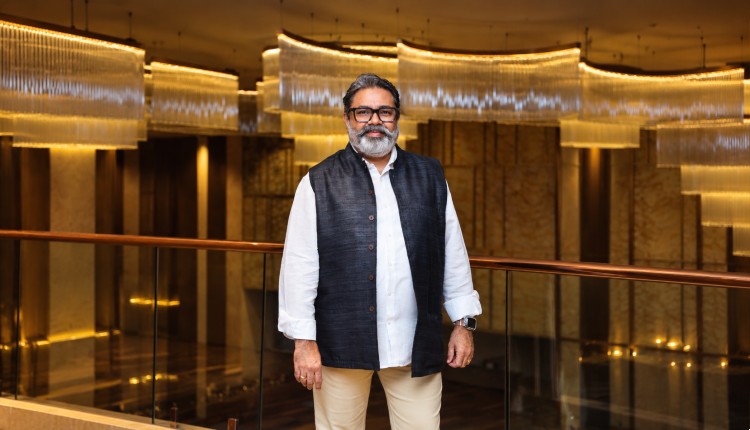

Technology changes. Markets change. Channels change. People do not. Kaustubh Patki has arrived at that belief after more than 25 years in marketing, and he sees marketing at its core as still about understanding human needs, solving real problems and building trust.
Kaustubh has spent more than two decades in enterprise technology marketing, helping build market visibility and recognition for brands including RSA, Veritas, Micro Focus and OpenText. Today he is Field Marketing Leader – India at OpenText. He was drawn to marketing by the combination of creativity and business impact; enterprise technology, he says, happened almost by accident, but it quickly became a passion.
In this edition of CMO Chronicles, Kaustubh reflects on why marketing is about outcomes and not activity, why the goal is not the biggest stack but the most effective one, why brand and performance are not competing priorities, and why the legacy he values most is the leaders he has mentored.
Here is Kaustubh Patki in his own words:
The Path to the Corner Office
What drew me to marketing was the combination of creativity and business impact. Early in my career, I was fascinated by the idea that the right story could change perception, influence decisions, and ultimately drive growth.
Enterprise technology happened almost by accident, but it quickly became a passion. I discovered that marketing complex technology is far more than product promotion. It is about translating innovation into business outcomes. Whether it is cybersecurity, AI, cloud, or information management, our job is to help customers understand not what the technology does, but what it enables them to achieve.
What has kept me in enterprise technology for over two decades is the constant evolution. Every few years, the industry reinvents itself, and marketers must learn an entirely new language.
One early lesson came from a campaign that looked perfect on paper. The messaging was strong, the creative was compelling, and the metrics suggested success. Yet it generated very little business impact.
That experience taught me that marketing is not about activity; it is about outcomes. Since then, I have always encouraged my teams to start with the business objective and work backwards. Every campaign should answer a simple question: “What business problem are we trying to solve?”
That lesson continues to shape how I lead today.
The Ever-Changing Stack
Technology should simplify marketing, not complicate it.
My approach is relatively straightforward. Every tool must demonstrate one of three outcomes: improve productivity, improve customer experience, or improve measurement. If it cannot clearly show value in one of those areas, it probably does not belong in the stack.
Over time, I have become a strong believer in consolidation. Many organizations accumulate tools faster than they retire them, creating unnecessary complexity. The goal is not to have the biggest stack. The goal is to have the most effective one.
Impact of Generative AI
AI has already become a significant productivity multiplier.
The biggest impact has been in content ideation, campaign planning, research, and personalization. Tasks that once required days can now be completed in hours. AI helps marketers start faster and explore more possibilities.
However, I do not see AI replacing marketers. The real value still comes from understanding customers, building relationships, and making strategic decisions. AI can accelerate execution, but judgment remains a uniquely human capability.
The best marketers today are learning how to combine human creativity with machine efficiency.
Data, Privacy & the New Rules
The industry is moving from abundance of data to quality of data.
For marketers, this means placing greater emphasis on first-party data, customer consent, and trust. The days of relying on anonymous tracking are gradually disappearing.
Rather than seeing privacy regulations as a limitation, I view them as a catalyst for better marketing. When customers willingly share information because they trust your brand, the quality of engagement improves significantly.
Measurement is also evolving. We must become comfortable with combining quantitative insights with qualitative indicators of customer engagement and influence.
Pace of Technology
The pace has accelerated dramatically.
When I started, major shifts happened over several years. Today, entire categories can emerge, mature, and transform within months.
The only sustainable strategy is continuous learning. I learn from customers, analysts, peers, industry publications, and increasingly from experimentation. I encourage my teams to remain curious, because curiosity has become one of the most valuable professional skills in modern marketing.
Brand, Boardroom & the Bottom Line
I do not see brand and performance as competing priorities. Strong brands improve performance outcomes, and strong performance investments reinforce the brand.
The challenge is balancing short-term demand generation with long-term market positioning. In enterprise technology, buying cycles can span months or even years. If marketers focus exclusively on short-term metrics, they risk weakening future growth.
The best marketing strategies deliberately invest in both. One generates today’s pipeline; the other creates tomorrow’s opportunity.
The hardest thing to prove to a CFO or CEO is often influence rather than attribution. A customer rarely makes a purchase decision because of a single campaign. Decisions are shaped by multiple interactions across multiple channels over time.
I have learned that the conversation changes when marketing is discussed in business terms rather than marketing terms. CEOs and CFOs care about pipeline, revenue, customer retention, market share, and growth. When marketing connects its activities to those outcomes, it earns credibility and confidence.
Sustaining the Career
Over the course of my career, I have worked through the rise of digital marketing, social media, cloud computing, data analytics, and now AI. The marketers who thrive are not necessarily the smartest; they are the most adaptable.
Personally, I have found it important to maintain interests outside work and invest in relationships. Marketing can be demanding, and perspective is often the key to longevity.
Single Most Important Lesson
Technology changes. Markets change. Channels change.
People do not.
At its core, marketing is still about understanding human needs, solving real problems, and building trust. Everything else is simply a tool.
Reflections
What I remember most are not individual campaigns but moments where customers told us that our marketing helped them see a problem differently.
One particular moment came after a leadership event where a customer approached our team and said, “This wasn’t a vendor presentation; it felt like a strategic conversation.”
That is what great marketing should achieve. It should create understanding, trust, and meaningful dialogue.
Looking back over more than two decades in enterprise technology marketing, I am proud of three things that have had a lasting impact.
First, I have had the privilege of helping build strong market visibility and recognition for some of the industry’s most respected technology brands, including RSA, Veritas, Micro Focus, and OpenText. Across different stages of their evolution, I have contributed to positioning these brands as trusted voices in their respective categories through strategic storytelling, customer engagement, and integrated marketing programs.
Second, I am particularly proud of leading several integrated marketing campaigns that not only delivered measurable business outcomes but also earned recognition from the industry. While awards are never the objective, they are a validation of the team’s ability to combine creativity, execution excellence, and business impact.
However, the accomplishment that gives me the greatest satisfaction is people development. Over the past 12 years, I have had the opportunity to mentor and develop marketing talent, and today four of those individuals have gone on to lead marketing organizations across leading technology companies. Campaigns eventually end, technologies evolve, and metrics change, but seeing people grow into confident leaders and shape the next generation of marketing is, for me, the most meaningful measure of success.
Ultimately, I believe a marketer’s legacy is not just the brands they help build or the revenue they influence, but the leaders they inspire and the culture they leave behind.