


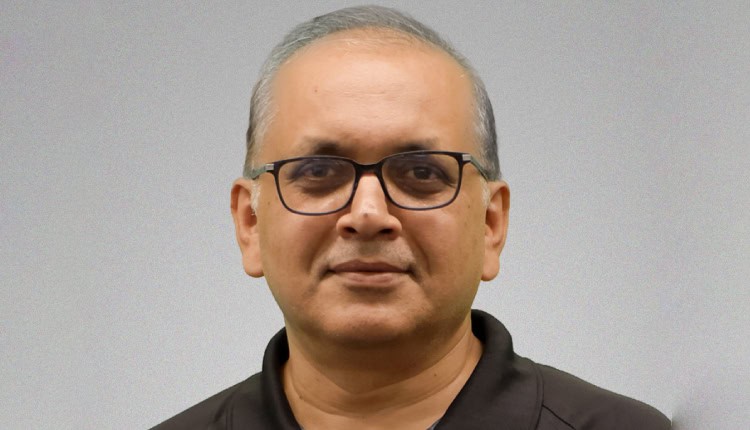

Two years ago, Arctic Wolf’s Bengaluru centre did not exist. Today it has grown to roughly 450 employees, and the cybersecurity company has used the period to build not one function but nearly the entire product stack out of India, from endpoint security and cloud to AI and applications. Devendra Rath, VP, Engineering and Head, India GCC at Arctic Wolf, says the number matters less to him than what it represents.
“We’ve grown to about 450 odd folks in this centre in the space of two years, and that’s really heartening. But I think the growth story is not just about numbers. We made a conscious decision to build this company in all its parts here, not just one part of the product,” Rath says.
A centre built end to end
Rath, who has spent close to 15 years in cybersecurity across McAfee, Juniper, Pulse Secure and Sophos before joining Arctic Wolf, argues that building only fragments of a product from an India centre stifles innovation because engineers lose sight of the bigger picture. Arctic Wolf’s India operation instead houses engineering, product management, program management and UX under one roof, alongside functions that did not exist in India two years ago, such as the AI team and the security operations centre (SOC) team.
The most visible outcome of that structure is the company’s agentic SOC, a large part of which was built out of the Bengaluru centre. Arctic Wolf runs a managed SOC model, monitoring customer environments through agents, network sensors and cloud integrations rather than sitting on customer premises. “Ninety five, maybe ninety nine per cent of what comes in is noise. Our customers may not see that, but suppressing the noise so that only the high quality signals get through is really the work,” Rath says.
Teaching AI to cut through the noise
“Arctic Wolf’s threat research team continuously feeds newly discovered attack patterns into its detection pipeline, even for threats a given customer has not yet encountered,” says Rath. AI, in his framing, is deployed specifically to filter that noise so human analysts can focus on deeper threat hunting and correlation rather than repetitive triage.
Rath pushed back on the idea that this amounts to automating away headcount. “I don’t think AI is positioned correctly when it’s seen as a way to save headcount. It’s actually saving brain energy. What it frees up is the ability to go into markets we would never have thought of, because a product that took two years to build might now take three months,” he adds.
The rise of the product engineer
Rath believes the deeper shift AI is forcing is not on org charts but on job descriptions themselves. He expects the traditional split between product managers who specify and engineers who build to give way to what he calls the “product engineer,” someone equally fluent in the domain and in the code. Software, he argues, was unusual in tolerating engineers who understood little about the business their code served, a gap he does not expect other industries, or software itself, to keep tolerating.
“Half your time is freed up now because the software part is going to get better and better. What you have to do is think, think, think, and let the code happen. Earlier it was some code, some thinking, some code, some thinking. AI is not doing the thinking for you. If you think nonsense, it will create nonsense code,” he points out. His advice to engineers joining the India centre, he added, is to build a career within the domain of cybersecurity rather than moving across unrelated sectors.
From straight lines to experiments
Rath is candid that Arctic Wolf’s own AI projects spent much of the last year in the kind of foggy, unresolved state that many enterprises are still navigating. He traces this to a fundamental mismatch in mindset, since engineers trained on deterministic software, where a given input reliably produces the same output, have had to unlearn that discipline for AI systems that behave differently from one run to the next.
“The way we build software has changed one hundred and eighty degrees, not thirty or forty five. With AI, you have to break the thinking that it is predictive and a straight line, and accept that it is highly experimental. You experiment, you fail, you experiment, you fail, and maybe the fifteen hundredth experiment succeeds,” he explains.
That experimentation also had to contend with a shifting toolchain, he says, since observability tools and the underlying models were themselves changing while Arctic Wolf built on top of them. The harder problem, in his account, was not features but quality, since a working proof of concept can be built in half an hour but rarely survives contact with production. For the agentic SOC specifically, the team set an internal bar of roughly 95 per cent accuracy before deployment, which in turn depended on having enough data to prove it.
Betting on fresh talent
Arctic Wolf’s India centre has partnered with three to four colleges for a six month internship programme now in its fourth batch, and Rath says every intern from those batches has converted to a full time offer. Selection still runs through a paper and pen test devised in the centre’s early days. What he values in incoming graduates, is less about prior skill than curiosity, and he sees the newer generation asking more questions than his own did.
“Asking the right question means everything, whether it is in business or in following your passion. I think the new generation solidly identifies with that,” Rath says, adding that his own generation was taught to keep quiet and get the work done.
Looking ahead, Rath shares that the India centre’s near term focus is on automating threat intelligence further and shortening the time it takes to close out a breach, work he describes as unglamorous but central to how the centre measures its progress, not as a fixed target but a continuing one.
