

Open source has shaped our entire technology philosophy: Kailash Nadh, Zerodha

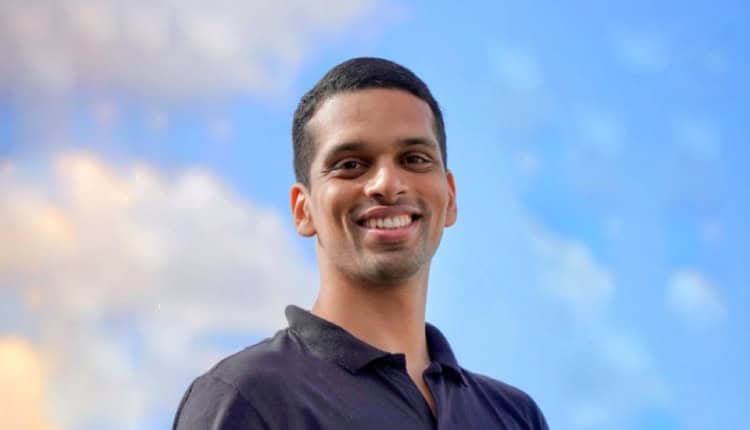

Over the past decade, Zerodha has significantly grown from a small brokerage startup with just a few thousand users into one of India’s largest retail investment platforms. The company’s approach, however, has remained consistent, which is building technology and making decisions based on simplicity and first principles rather than growth targets or investor expectations.
In a recent conversation with Express Computer, Kailash Nadh, Chief Technology Officer, Zerodha, explains how this philosophy shapes the company’s engineering and product design, its views on open source, the adoption of AI, and how it continues to maintain trust in a highly competitive fintech landscape.
Engineering guided by first principles
Zerodha’s emphasis on simplicity extends beyond user experience, it is more so deeply embedded in its engineering and decision-making frameworks.
“That is 100 percent our philosophy,” says Nadh. “No matter what happens, market conditions, revenue, or scale, we only make engineering, product, and business decisions from a first-principles perspective. The frameworks we had in 2013 are exactly what we follow today,” Nadh adds.
At the time, Zerodha had about 5,000 active clients. Today, it has more than 2 crore. Despite the exponential growth, Nadh says the underlying principles have remained the same.
Scaling without over-engineering
When asked how the company managed to scale during periods of rapid growth, particularly during the pandemic, Nadh calls that phase an “anomaly.”
“We had to wait till 2020 to reach two million users. Then, during the lockdowns, we went from two million to eight million within seven months,” he says.
Rather than designing systems for extreme scale from day one, Zerodha’s approach has been to keep systems modular and adaptable. “We never built for 50 million users. But we built things in a way that, if scale happened, the system could adjust,” Nadh adds.
Even as the user base grew significantly, Zerodha’s tech team remained relatively small. “In 2020, we had about 30 people in the tech team. The same team managed the scale because of the foundations we had built earlier,” he points out.
Open source as a foundation
Zerodha’s entire technology stack runs on open source software, and the company has consistently acknowledged and contributed to the community.
“Everybody runs on open source, the world’s best databases, programming languages, and frameworks are all open source,” Nadh points out. “The challenge is cultural. Many companies use open source but never talk about it or contribute back.”
He adds that Zerodha’s approach has been to acknowledge, contribute, and support open source projects both through code and financial means. “It’s a responsibility as well as a way of sustaining the ecosystem we depend on,” he says.
Balancing innovation and regulation
As a regulated financial entity, Zerodha must navigate multiple layers of compliance and oversight. Yet, it has continued to introduce changes and internal innovations.
According to Nadh, the company’s approach to innovation is rooted in risk management. “We’ve evolved a system that balances regulatory, market, and user risks with innovation,” he explains. “We don’t just build new systems; we also replace existing ones that may not scale for the next decade. It’s riskier than building something new, but necessary.”
Practical use of AI
Nadh shares that AI has become a part of Zerodha’s internal operations, though the company’s use cases focus on efficiency rather than customer-facing automation.
“The LLM wave began about three years ago, and we were early adopters,” Nadh says. “Our entire tech team uses them for engineering assistance. We’ve also built AI models to improve internal workflows.”
For instance, the company processes tens of thousands of customer support calls every month. “Earlier, a quality team manually reviewed a sample of these calls. Now, an AI pipeline analyses 100% of them, marking quality and compliance issues automatically. It’s a big efficiency gain,” he says.
Data governance and AI
Given the sensitivity of financial data, data governance remains a key part of Zerodha’s AI framework.
“We use self-hosted, open source AI models within our infrastructure,” says Nadh. “There’s no financial data going outside our systems. Governance mechanisms define what data is used and where. There’s no AI making decisions on behalf of customers, it’s purely for internal efficiency.”
Competing through trust and culture
Zerodha’s zero-brokerage model, once its key differentiator, has now been widely adopted in the market. Nadh believes the differentiator today lies elsewhere and it is in trust and customer experience.
“People who’ve been with us have referred others, that’s how we built our customer base without advertising,” he avers. “We’ve never breached that trust. Every product or business decision continues to be customer-centric.”
He notes that while many apps look similar on the surface, the behaviour behind them differs. “Some send frequent push notifications encouraging users to trade. We don’t. People are starting to value that restraint,” he adds.
The changing role of the CTO
Nadh is candid in his assessment of how technology leadership roles have evolved. “I’m not a fan of most CTO roles,” he admits. “Once people reach that level, they often stop being engineers and start making administrative or procurement decisions. The title has become ambiguous.”
For Nadh, the essence of the role lies in staying deeply technical. “With AI and other complex technologies becoming integral, technical leaders must understand the systems they are dealing with. Sitting in a boardroom and making abstract decisions doesn’t work,” he says.
Looking to the future, Nadh expects AI to change the way users interact with financial systems altogether. “Today, people log into a trading app to invest. In the future, many will rely on intelligent assistants that interact with brokers on their behalf,” he says. “That means the direct interface with users could change. But as long as trust and quality remain, the relationship with the customer will continue, even if the interface looks very different.”
