

Celebrating 30 Years of Public Internet Access in India – Launch of GIAS (Gateway Internet Access Service)

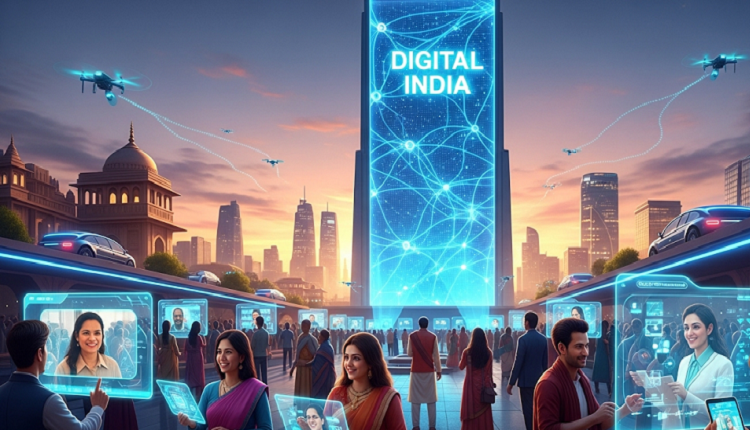


Thirty years ago on August 15, 1995, as the national flag was being hoisted in India, the nation entered a new era of digital connectivity with the launch of public internet access by then Videsh Sanchar Nigam Limited (VSNL). As the first major step toward transforming the country’s communication landscape, this milestone not only marked the beginning of Internet services for the public but also laid the foundation for the technological revolution that has since reshaped Indian society, commerce, economy, and culture. In 1995 there were about 10,000 users which grew to 1 million in just four years. Today, over 950 million Indians use the Internet making it the world’s second largest users after China and that too with one of the lowest costs in the world.
Three decades ago, the concept of the Internet was unfamiliar to most citizens. In 1995, only a handful of universities, and government institutions and couple of businesses had access to the Internet using dedicated leased lines. The vast majority of Indians had no exposure to the potential of this revolutionary technology which was taking the world by storm. The VSNL initiative changed that dramatically bringing the power of the World Wide Web and more to homes, businesses, and all establishments.
Amitabh Kumar Director Operations, VSNL (Currently,Head of Broadcast Operations Zee Network and Advisor Technology) says, “Going back thirty years is really a challenge but not to us as they are crystal clear to us. The launch of Internet by VSNL, saw the entire landscape change. As more and more people got onto the Internet, everything in India changed. We kept adding more and more dail-up lines in hundreds. None of us, including our team leaders were aware that what we were doing was going to be so impactful for India. At the same time none of us appreciated how fast this will expand and how quickly this will grow driving the economic progress for India. I am sure that all of us from generation t0 generation will continue to contribute.”
The State of India’s Communication Landscape in 1995
In 1995, the Indian telecommunications sector was quite underdeveloped. India transformed from a low‐density fixed line telephony service by the state monopoly in the 1990s to one of the world’s largest and most dynamic mobile‐Internet ecosystems. This happened by opening of the sector, investments in infrastructure, unleashing entrepreneurial zeal and serving the hunger of consumers who rapidly adapted to it. Underlying this was a big shift in policies and de-regulations.
In those days, the public switched telephone network (PSTN) was the primary method of communication. 1995 was also the year when the first mobile call was made in India but mobiles were very expensive and the network non-existent. It took a while to become mainstream and grow. For most people, connecting to the outside world meant relying on the postal service or expensive long-distance landline calls. The concept of global connectivity via the Internet was practically unknown to the common citizen. Telephone lines being analog required modems to convert signals to digital.
Pre-public-internet in India what exists was ERNET and a network of BBSes
India’s digital journey started much earlier than 1995 in a rather organic way. There were two main threads, namely ERNET (Education and Research Network) and BBSes (Bulletin Board Services). ERNET was a collaboration between India’s Department of Electronics and the United Nations Development Programme (UNDP), and it helped introduce email to educational and research institutions. ERNET was launched in 1986 initially using UUCP (Unix to Unix Copy Protocol), X.25, and later limited TCP/IP so it was not the full/true Internet at that time. ERNET established full TCP/IP connectivity in 1988-89 enabling broader network communication and data exchange.
Likewise, to start with, BBSes were also not TCP/IP based and not the Internet as we know it today. BBSes began as hobbyist and home run setups and evolved from there. The first BBS in India and the region, was ‘Live Wire! BBS’ started by Suchit Nanda in 1988-89 which grew to be the largest BBS with nodes in other cities and connected to FidoNet. In time, there were dozens of BBSes started across India by techies and enthusiastic students, long before commercial networks took over the space. These were network communities and these initiatives laid the foundations to full public Internet access which was launched by VSNL in August 1995
ERNET had eight premier institutions as participating agencies—NCST Bombay, Indian Institute of Science, five Indian Institutes of Technology (Delhi, Mumbai, Kanpur, Kharagpur and Chennai), and the DoE in New Delhi. ERNET was a multi protocol network with both the TCP/IP and the OSI-IP protocol stacks running over the leased-line portion of the backbone. Since 1995, however, almost all traffic was carried over TCP/IP.
In 1990, the ERNET was allotted Class B IP address 144.16.0.0 by NIC (then InterNIC). Subsequently, Class C addresses were allotted to ERNET by APNIC.
In January 1991, the first leased line of 9.6 kbit/s was installed between Delhi and Mumbai.
In 1992, all IITs, IISc Bangalore, DOE Delhi and NCST Mumbai were connected by 9.6 kbit/s leased lines, and a 64 Kbps Internet gateway link was commissioned from NCST Mumbai to UUNet in Virginia, United States.
In 1995, NICNet was established for communications between government institutions. The network was operated by the National Informatics Centre.
VSNL’s Role in Internet Access
VSNL, which had already been handling international data services, was uniquely positioned to pioneer public internet access but it needed the strong and determined leadership of then CMD, Mr. BK Syngal, Mr. Amitabh Kumar and Mr. Neeraj Sonkar. There were not just technical challenges but also regulatory considerations and hurdles to be crossed. With a lot of team effort VSNL started the pre-launch service on 14th August 1995 followed by an announcement and full launch on August 15, 1995.
Neeraj Sonkar, GM VSNL (Currently, Chief Technology Officer at Constl) says, “We had a three pronged strategy, fixing immediate crisis by adding capacity, re-design the network architecture for scale & capacity by moving to dynamic routing (OSPF, BGP4) to adding infrastructure with new design & architecture. At the same time we got to learn what it meant to serve customers. It was an amazing experience to work with a team with a never say die spirit.”
This launch officially allowed the public- individuals, businesses, and educational institutions, to connect to the internet via dial-up connections and leased lines.
Internet was initially made available to a select number of cities, namely Mumbai, Delhi, Chennai, Kolkata and Pune to be soon followed by Bangalore. The initial network of 6 POPs was connected via 2×64 Kbps links with MCI through Mumbai on satellite (Intelsat 359 degree). Mumbai was the gateway location while the rest of the POPs were connected to Mumbai in a star topology. Initially, the dial-up capacity was just 16/32 lines in a location and launched with only 4 Class C IP addresses from APNIC. It would be an understatement to say that the launch was a huge success. VSNL was overwhelmed and underprepared for the response.
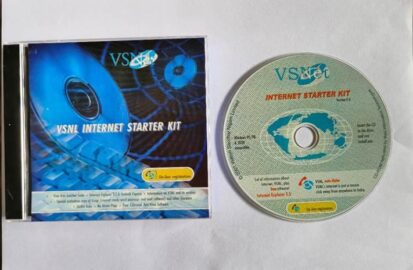
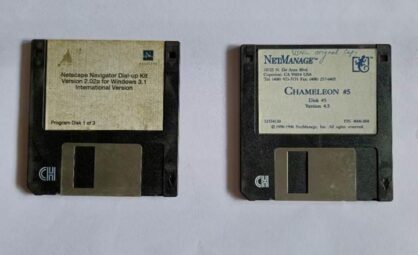
It is noteworthy that up till that point VSNL was in B2B segment and was not geared for the huge customer demands and handholding required for a new technology. While the media praised the launch there was a lot of brickbats on the quality of services and limited capacity. Mr. Syngal, CMD boldly admitted “I goofed up. I goofed up big time. Our market intelligence was wrong, which meant that our sizing of the requirement was wrong. And there were technical problems that we never anticipated would turn out to be that serious.” “We have the game plan to build the system into a world-class system. We have carried out studies as to what is required, and I need 10 weeks from you.” “I can assure you that at the end of 10 weeks, possibly before that, you will have a system that India will be proud of.” And he did! The demand was such that very soon, DoT asked VSNL to introduce Internet Services to all Tier 2 Cities as well, starting with state capitals which happened from 1996 onwards.
From 1996-97 there was a major overhaul of the network architecture and many design changes were made. Static routing was changed to dynamic with load balancing. Help was taken from few consultants, and domestic as well as international companies like Cisco, DEC, Wipro, and Sun.
A new Portal Billing System and Mail Service (Send mail, SMTP, POP3), DNS, AAA, Web Portal was deployed on Sun Microsystem Platform in a distributed architecture keeping in mind scaling up and having carrier grade infrastructure and operations. This change also helped users have short and personalized email logins like [email protected] instead of [email protected]
All this while pricing was dropping, service quality improving, and speed going up.

To start with there were two types of accounts: ‘shell’ and ‘TCP/IP’. Shell was the command prompt text account and TCP/IP was the graphical interface account. There was a much lower cost ‘student’ account which was basically a ‘shell’ account.
In 1998 GIAS tariffs were as follows:
– Terminal Dial-Up: 100 hours/year at ₹3,000, 250 hours at ₹6,500, 500 hours at ₹10,000.
– ISDN: 100 hours/year at ₹5,500 (64 kbps) or ₹11,000 (128 kbps).
– Leased Lines: 64 kbps at ₹8 lakh/year (reduced for exporters and educational institutions).
– Web Hosting: Business page at ₹20,000/year for 2 MB space, Premium Business at ₹30,000/year for 5 MB.
The Rise of Private Internet Service Providers (ISPs)
With VSNL opening the floodgates and giving the real taste of Internet to the public, there was a growing demand to open the space to others from the monopoly. The National Telecom Policy of 1999, aimed to increase internet access and affordability by allowing private ISPs. Satyam Online was the first Cat-A national ISP which launched. Hundreds of ISPs got permission to launch services, thousands of domains were registered and websites setup and usage of email grew exponentially making the World Wide Web a daily part of life and India a part of the growing digital revolution.
The Internet Revolution in India
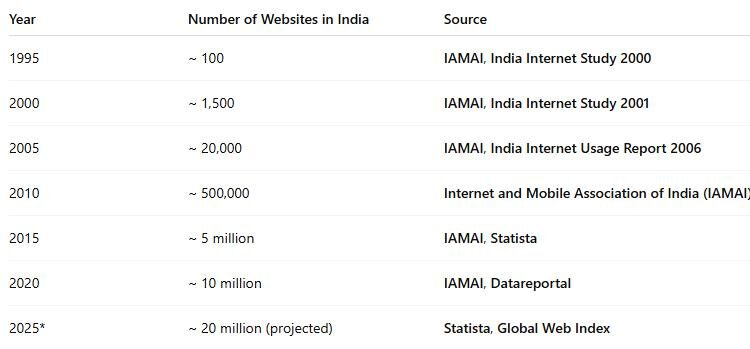
The public launch of internet access in 1995 sparked a wave of interest and excitement across the country. Initially, access was limited to those who could afford the subscription fees and had access to a telephone line as well as understanding of the technology. However, as knowledge grew on the utility, infrastructure expanded, prices dropped, the Internet began to enter the mainstream with exponential growth rates.
In the early 2000s, the expansion of broadband internet infrastructure in urban areas, coupled with the growth of wireless technology, made the Internet accessible to millions of Indians. By the mid-2000s, broadband internet became more widely available, and the launch of mobile internet in the late 2000s truly democratized Internet access. The introduction of 3G and 4G technologies in the 2010s further accelerated the digital revolution in India, enabling millions of rural and semi-urban citizens to access the Internet at affordable rates.
One of the most profound changes brought about by widespread Internet access was the way people consumed information. With the advent of search engines like Google in 1998, social media platforms like Facebook in 2004, and streaming services like YouTube in 2005, the Internet became a major source of entertainment, news, and communication. For many, it was the gateway to the world beyond their immediate geographic location, offering access to educational resources, international markets, and global communities.
The Impact on Education, Business, and Society
The digital revolution had a profound effect on India’s education, business, and societal structures. In the education sector, the Internet provided an unprecedented opportunity for students to access knowledge. Online courses, e-learning platforms, and digital libraries enabled students in remote areas to get the same educational resources as their urban counterparts. The launch of the Internet marked the beginning of the “knowledge economy” in India, with software exports becoming a significant driver of economic growth.
In the business sector, the Internet opened up new avenues for entrepreneurship. The rise of e-commerce platforms, digital marketing, and online payment systems transformed the Indian retail landscape. Small and medium-sized businesses, which were traditionally confined to local markets, were now able to reach a global audience, leading to an explosion of digital entrepreneurship.
From a societal perspective, the Internet became a powerful tool for social change. Online platforms allowed for the mobilization of political and social movements, providing marginalized communities with a voice. The rise of social media gave a platform for youth to express their opinions, share ideas, and build communities around shared interests.
Economic Impact
The economic impact of internet startups in India has been massive, contributing billions to the country’s GDP. The Internet contributed around 1.6% of India’s GDP (~$30 billion) in the early 2010s, with potential to grow to 2.8-3.3% by 2015. In 2021, the Indian Internet economy was valued at approximately $100 billion and is projected to reach $800 billion by 2030, according to the NASSCOM report. This surge is largely driven by the rise of e-commerce, fintech, and other digital services.
E-commerce giants like Flipkart and Amazon India have seen a massive boom, with Flipkart alone reaching $8.6 billion in GMV (Gross Merchandise Value) in 2020. Fintech is contributing significantly to financial inclusion. India’s online retail market is expected to grow at a rate of 25% annually, further boosting the economy.
In terms of employment, India’s startup ecosystem has created around 500,000 direct jobs across sectors like software, e-commerce, and digital services.
By 2025, it is estimated that the Indian digital economy could create up to 1.3 million jobs. Internet-related expenditures created about 6 million direct and indirect jobs initially, with potential to add an additional 16 million jobs as the sector grows. The government’s Digital India initiative has also played a crucial role, allocating approximately ₹10,000 crore (around $1.4 billion) to strengthen the country’s Internet infrastructure, driving economic growth and bridging digital divides. This growing digital sector is expected to keep contributing to both employment and GDP for years to come.
The Internet has been a catalyst for India’s economic growth by expanding GDP contribution, generating millions of jobs, transforming traditional sectors through digital innovation, increasing productivity, and driving inclusive growth through greater digital access and infrastructure. The outlook remains highly positive with projections of the Internet economy reaching $1 trillion by 2025 and continuing to transform India’s socio-economic landscape.
Future of Connectivity in India
The Internet in India today is mainly delivered by 17 different undersea fibre cables, including SEA-ME-WE 3, Bay of Bengal Gateway and Europe India Gateway, arriving at 5 different landing points. In 2022, there were talks and it was reported that India is likely to get Starlink (satellite based Internet). India has also established a 2,300-kilometre undersea cable to its Andaman and Nicobar archipelago in 2020 and a 1,868 kilometre undersea cable to Lakshadweep islands to increase internet connectivity and build redundancy.
Apart from this, India has one overland internet connection at the city of Agartala near the border with Bangladesh. In 2024, Reliance completed underlying the world’s largest submarine cable system, Europe-Xpress (IEX) and India-Asia-Xpress (IAX), connecting Europe and Asia with India its centre. India’s total international internet bandwidth capacity by VSNL began with a 64K satellite link in 1995. Today India’s reported total bandwidth is said to be 49,351 Gbps (or approximately 49.3 Tbps) as of late 2024, according to service providers’ data. This number is reflective of the international bandwidth owned by various operators around the quarter ending September 2024. Furthermore, India’s data transmission capacity is projected to quadruple in 2025 with the activation of new submarine cable systems, which will connect India to key global markets and replace aging infrastructure.
Conclusion
The launch of public internet access by VSNL on a wet August 15, 1995 morning in Mumbai as the national flag unfurled,was truly a defining moment in India’s digital history. It served as the catalyst for a nationwide technological transformation that has unleashed a digital revolution, reshaping the country’s economy, culture, and social fabric. The internet, once limited to an elite few, is now an essential part of everyday life for millions of Indians. The digital divide that once separated urban from rural, affluent from marginalized, is gradually reducing with more Indians gaining access to the opportunities and benefits that the internet has to offer.
— Suchit Nanda is a pioneering figure in the history of the Internet and Bulletin Board Systems (BBS) in India. He has been associated with Express Computer since launch and has served on the Editorial Board as advisor. Suchit contributed articles and wrote on technology for Express Computer. He is advisor to Reliance Industries Ltd and part of the selection committee for APNIC Foundation