

Enterprises should invest in cyber threat intelligence, network segmentation & quantum-resilient cryptography: Baidyanath Kumar, JK Lakshmi Cement

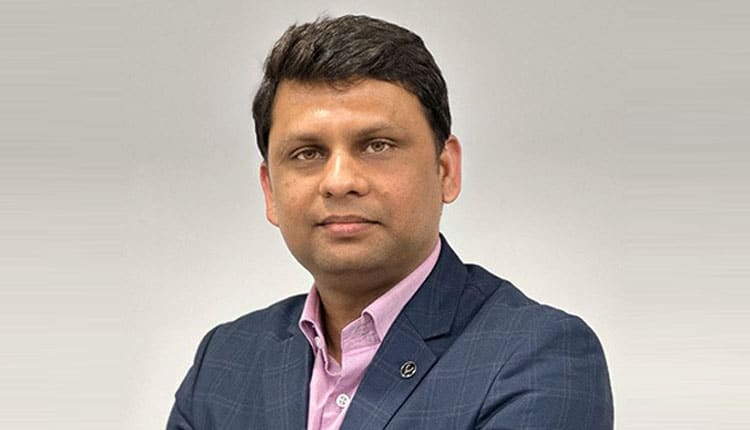

At the 4th edition of Technology Senate-North organised by Express Computer, Baidyanath Kumar, Chief Information Security Officer and Data Protection Officer at JK Lakshmi Cement, delivered a powerful session on how artificial intelligence is transforming cybersecurity operations. Speaking on the theme “The Role of AI in Cybersecurity and the Evolution of SOC 2.0,” Kumar explained why traditional, human-driven security operations can no longer keep pace with AI-powered cyber threats and how his organisation is building a new model for the future.
The rise of AI-driven attacks
Kumar began by painting a vivid picture of today’s threat landscape, one where cybercriminals are increasingly leveraging artificial intelligence to automate and amplify their attacks.
“It’s crucial to understand the velocity and sophistication of attacks today,” he said. “Hackers are innovating faster than ever before. What used to take days now happens in minutes.”
He cited alarming statistics to illustrate the growing intensity of the problem. The average time to exfiltrate data during a breach has fallen from nine days to just 25 minutes. At the same time, the average resolution time for incidents remains over 23 days in many organisations. “This gap is where the battle is lost,” he emphasised.
Kumar warned that despite heavy investments in security tools, many enterprises are unknowingly adding complexity rather than resilience. “We keep adding tools and technologies, but that often comes at the cost of simplicity,” he said. “The challenge is not the lack of tools, it’s how effectively we integrate and automate them.”
Why SOCs must evolve
To fight this new wave of intelligent, fast-moving cyberattacks, Kumar argued that organisations must rethink how their Security Operations Centres (SOCs) function. The traditional, human-centric, reactive SOC must give way to what he calls SOC 2.0, a system powered by machine learning, automation, and contextual intelligence.
“Human analysts alone cannot match the speed of AI-driven attacks,” he explained. “We need to empower them with intelligent automation so that our response is faster than the attacker’s next move.”
The AI-powered SOC at JK Lakshmi Cement
Sharing the company’s own journey, Kumar detailed how JK Lakshmi Cement built an AI- and machine learning-powered SOC designed for speed, precision, and scalability.
The results, he said, have been transformative. “We no longer rely entirely on humans for L1 and L2 decision-making,” he noted. “Today, over 90% of incidents are automated, our mean time to detect (MTTD) has improved by 99.5%, and our mean time to resolve (MTTR) has dropped from more than a day to under 30 minutes.”
He added that the goal is to bring detection and resolution down to less than 10 minutes for all types of incidents.
The company’s SOC integrates data from multiple sources including attack surface management, network and endpoint telemetry, identity management systems, and cloud environments into a unified AI engine that performs real-time detection, correlation, and automated response.
“In the past, a breach might have gone unnoticed for hours or days. Now, our systems detect and neutralise threats within minutes, often before they can cause damage,” Kumar said.
A framework for cyber resilience
Kumar also shared a three-layered approach to defense:
1. Prevention: Strengthen identity, email, and endpoint security along with remote access controls.
2. Detection: Implement privilege access management and prioritised incident mitigation.
3. Resilience: Ensure secure backups and recovery with offline protection.
He highlighted that cybersecurity strategy should never be one-size-fits-all. “Every organisation must assess its own threat landscape and business context,” he advised. “Copying another company’s framework or tools will not guarantee protection.”
The road ahead
As cyber threats become more sophisticated, Kumar urged enterprises to move beyond passive defenses and invest in cyber threat intelligence, network segmentation, and even quantum-resilient cryptography.
“When we’re up against AI-driven, state-sponsored actors, our defenses must be just as intelligent,” he said. “We must blend machine learning, automation, and human expertise to stay ahead.”
Kumar closed his session with a simple but powerful reminder: “Cybersecurity is not just about protection, it’s about resilience. The goal is not to prevent every attack, but to detect, respond, and recover faster than ever before.”

Thank you for the clear roadmap — it makes the process less intimidating.
Nice balance of theory and practical advice. Well done!