

From compliance to intelligence: How enterprises are rewiring risk for the AI era


In a world defined by constant disruption—geopolitical conflicts, climate volatility, and relentless technological acceleration—risk is no longer a back-office function. It is fast becoming a front-line strategic lever.
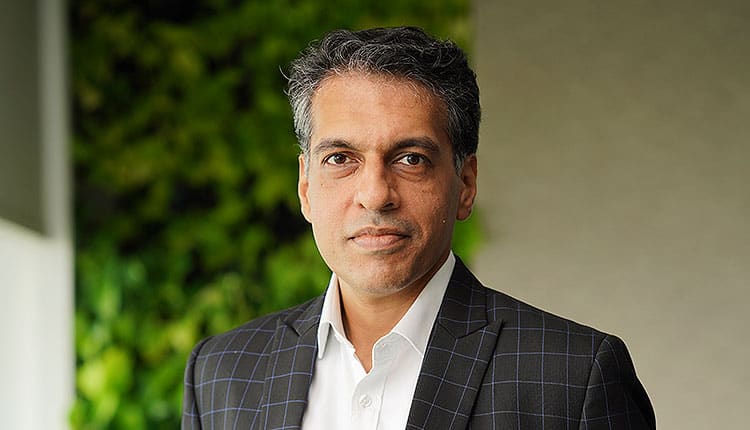
“The world has become far more uncertain, and that uncertainty is real,” says Siddharth Vishwanath, Leader, Risk Consulting with PwC India, as he outlines the shifting contours of enterprise risk. From supply chain shocks triggered by conflicts to the breakneck evolution of AI, the traditional playbook of risk management is being fundamentally rewritten.
From lagging indicators to leading strategy
For decades, risk management largely followed regulation. Organisations waited for regulators to define guardrails, and compliance became the benchmark of safety. That model is now obsolete.
“In today’s world, you cannot wait for regulations to manage risk—you have to lead,” Vishwanath explains.
This shift marks a clear divide between two types of organisations: those still operating with a compliance mindset, and those embedding risk into business strategy. The latter are not just mitigating threats—they are actively using risk intelligence to seize opportunities, move faster, and outmaneuver competition.
The rise of predictive and real-time risk intelligence
At the heart of this transformation is technology—particularly AI. Traditional risk models relied heavily on retrospective analysis and sampling-based audits. Today, enterprises are moving toward continuous, real-time monitoring.
“Organisations are shifting from detective approaches to predictive and proactive risk management,” he says.
AI is enabling businesses to scan entire transaction populations, detect anomalies in real time, and even predict fraud or control failures before they occur. This evolution is not just about efficiency—it’s about fundamentally changing how organisations perceive and respond to risk.
AI risk: Accountability can’t be outsourced
As enterprises double down on AI and GenAI adoption, a new layer of risk complexity is emerging—one that cannot be delegated to machines.
“Even if AI makes a mistake, the organisation is liable,” Vishwanath notes, referencing real-world legal precedents.
This raises critical questions around accountability, bias, and trust. Enterprises must ensure that AI systems are rigorously tested, continuously monitored, and governed with clear oversight frameworks. For high-stakes decisions, the principle is clear: human-in-the-loop is non-negotiable.
AI may augment decision-making, but it cannot replace accountability.
The hidden risks: Misplaced bets and slow adoption
Beyond the well-documented risks of bias and hallucination lies a more strategic threat—getting AI wrong.
“The real risk is whether you are making the right AI investments and whether you are adopting them fast enough,” he says.
In an environment where capital is finite, misallocated AI investments can set organisations back significantly. Equally, slow adoption can erode competitive advantage. The current AI wave, Vishwanath argues, is a true inflection point—one where market leaders and laggards could switch places based on execution speed and strategic clarity.
Breaking silos: The case for integrated risk
Despite heavy investments in tools, many enterprises still struggle with unified risk visibility. The problem, however, is rarely technological.
“It’s more about focus and prioritisation than capability,” he points out.
Risk today cuts across domains —cybersecurity, fraud, compliance, third-party ecosystems—and cannot be managed in silos. A cyber incident, for instance, may simultaneously be a fraud issue, a regulatory concern, and a process failure.
The path forward lies in convergence—bringing together disparate risk functions under a unified framework that reflects the interconnected nature of modern threats.
Designing for resilience, not just prevention
If disruption is the new normal, resilience must become the default strategy.
From cyberattacks to supply chain breakdowns, organisations must not only anticipate risks but also design systems that can absorb shocks and recover quickly.
“Resilience planning and testing are becoming critical aspects of risk management,” Vishwanath emphasises.
This marks a shift from static risk mitigation to dynamic resilience engineering—where agility, redundancy, and rapid response capabilities define success.
Culture: The ultimate risk control
Amid all the technology and frameworks, one factor remains decisive: organisational culture.
“You may have the best systems, but people are often the weakest link,” he says candidly.
Frauds, control failures, and governance lapses often stem from human behaviour—collusion, override of controls, or lack of accountability. Building a strong risk culture requires more than policies; it demands storytelling, incentives, awareness, and, most importantly, decisive leadership.
“The tone at the top is not what you say—it’s what you do,” Vishwanath adds.
The road ahead: Intelligent, integrated, and human-centric
Looking ahead, risk management will increasingly leverage AI-driven systems, with selective autonomy in areas like real-time fraud detection. However, full autonomy remains unlikely in the near term.
Instead, the future will be defined by a hybrid model—where intelligent systems augment human judgment, and risk functions evolve into strategic enablers of growth.
As enterprises navigate the AI-driven digital economy, one thing is clear: risk is no longer just about avoiding downside. It is about enabling upside—with intelligence, speed, and resilience at scale.
