

From delivery centre to global benchmark: How India is reshaping StoneX’s operating model

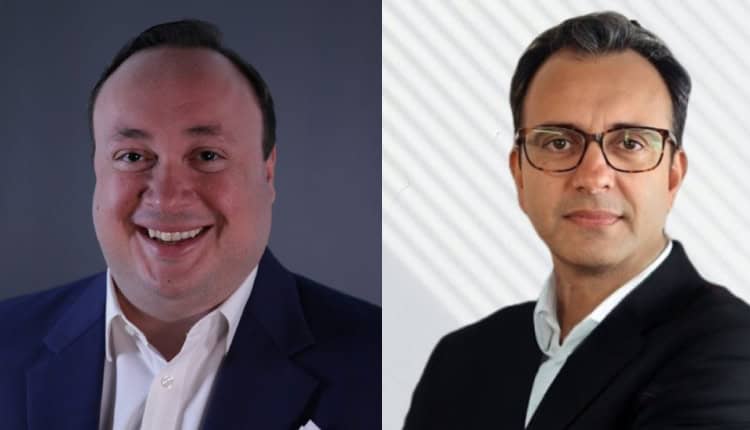

StoneX, a 101-year-old global financial services firm and one of the world’s largest non-bank financial institutions, is quietly turning India into a strategic engine room for its next phase of growth.
“We are probably the biggest non-bank financial institution out there,” says Gregory Kallinikos, Chief Executive Officer, APAC, StoneX. “We offer every financial service conceivable apart from taking deposits – we’re not a bank. Everything else we do: investment banking, equities, fixed income, financial derivatives, physical trading of precious metals, grains, and agriculture.”
The group traces its roots back to one of the first members of the Chicago Mercantile Exchange (CME) in the US. Today, it is listed on Nasdaq, compounding growth with what Kallinikos calls “a capital appreciation story.”
“The company has about $2.3 billion of hard equity,” he explains. “This year, we announced our full-year results – the bottom line is about $300 million. We don’t pay dividends. We recycle the money into every single business, to add liquidity so we can do more activities in more countries.”
From vendors to a 600+ strong GCC backbone
StoneX has been doing business with India for nearly two decades, initially from outside the country, largely via the UAE. But the real shift began when StoneX started using small Indian technology vendors 10–15 years ago to support trading and back-office systems.
“Take something like the gold trading business, which is very traditional,” recalls Kallinikos. “People call you or email you for a price, then you arrange freight to transfer the precious metal. A lot of these businesses were done in a very archaic way. About a decade ago, like many others, we asked: how can we use technology to make these things run smoother and faster?”
What began as front-office trading enablement slowly extended deep into the back office. Over time, StoneX realised that the talent it needed to build and modernise its platforms increasingly sat in India.
“We were not pioneers in the GCC game,” Kallinikos admits. “We came a little bit late, 10 years later. But what happened in the last five years is that we acquired one of those providers and started with 30 people on the ground. That was five, five and a half years ago. Nowadays, we have Bengaluru, three quarters of the staff is over here, one quarter is in Pune, and we number about 630 people.”
The India offices – designed “at the highest standard” with modern workspaces, auditoriums, breakout areas, snacks and easy access – are positioned very deliberately as more than low-cost delivery centres.
“With GCCs, it’s a different offering to a client-facing operation,” he notes. “We want our staff to have every facility available to them. Then you go into the race like every other GCC provider – who can get access to the best people possible, and are you well known for the right reasons as an employer?”
Today, India is one of three major GCC hubs for StoneX, alongside Krakow in Poland and Colombia in Latin America. But increasingly, it is also becoming a model.
“India has now, by virtue of the good work that happened on the ground the last two years, become a benchmark in terms of how a GCC should operate for the group,” says Kallinikos.
XPAY: India-built platform that changed the game
The strongest proof point of that benchmark status is XPAY, StoneX’s modern payments platform – conceived, architected and delivered largely from India.
StoneX has long operated a wholesale payments business for NGOs, corporates, charities and, in the last decade, banks. The firm offers coverage in 140 currencies, specialising in exotics, and effectively acts as an extension of banks’ FX desks.
“One of the first things we did was modernise that business,” says Manu Dhir, Global Head of GCCs, StoneX Group. “We had a patchwork of systems and vendor solutions that created bottlenecks, limited transactions, frequent downtime and a huge army needed to maintain uptime.”
“What we did was come up with a completely homegrown solution, fully web-native, Kubernetes-based, developed in India,” he explains. “The architecture was developed here, the UI/UX was done out of India, and we went live in February this year.”
The results have been dramatic. “There’s practically no downtime. The number of transactions we support is now 20x of what we could do earlier,” says Dhir. “Around $40 billion of payments have already been made through that system. And it’s a completely homegrown solution, bottom-up.”
For Kallinikos, XPAY is a milestone in the group’s history. “Lock, stock and barrel, this entire solution was thought through, created, executed and delivered on time and on budget in India,” he avers. “In the history of the group, it’s one of the most significant projects in terms of the importance of the solution itself. Anything that can go wrong in these projects usually will go wrong, but this was delivered on time.”
The platform also allowed StoneX to retire several legacy vendors, sharply reduce costs, and improve operational efficiency across teams involved in exception handling and investigations.
The company has even embedded generative AI into XPAY. “We’ve used AI, we’ve incorporated GPT into that using an LLM,” Dhir says. “Payment instructions often come in clipped or misaligned. In a regular system, that would just be rejected. Now, to the extent of about 10%, those instructions get auto-corrected, and our straight-through processing rate has gone up by 10%.”
Kallinikos adds, “It’s basically 99.95% now. When they launched, it was 70%, then gradually it moved up.”
High-touch plus high-tech: The StoneX philosophy
Despite the heavy tech investments, StoneX is careful not to lose the human edge that originally defined the firm.
“The business was established on the basis of high-touch service,” says Kallinikos. “A bank can sell you a loan and another person can sell you a loan, but one of them does it without advice, the other has a human being at the end of a telephone answering your question.”
“Everybody and their dog now has a trading platform,” he continues. “But when you see an amazing UI/UX on your mobile, you don’t really know who’s standing behind it. Who you trade with in financial services matters. When you trade with StoneX, you know there’s a solid counterparty underpinning the transaction.”
That philosophy shapes how the company thinks about AI and automation as well.
“AI is here to make things simpler, to automate, to make us nimbler,” Kallinikos says. “But I think there’s an element of the human factor that remains very important, even in financial services. Our aspiration is to offer best-in-class services from a technological perspective, but we don’t forget our origins.”
He points out that around “70% of our business is high touch,” and every new platform is designed to preserve that model – even though it is more expensive.
Compliance as a competitive advantage
For a firm operating across 140 currencies and multiple asset classes, regulation and compliance are non-negotiable – and another area where StoneX believes it has invested ahead of the curve.
“Over a decade ago, after the global financial crisis, compliance costs for financial services players went through the roof,” recalls Kallinikos. “We went through the hard job of making sure that if we’re going to be in a particular business, we don’t cut corners. We are very sensitive to reputational risk because we house so many businesses.”
Today, StoneX is fully licensed in every jurisdiction where it operates. “Now, all these years later, it has become a competitive advantage,” he says. “If somebody wants to compete with us, they have to go through the same difficult process from scratch or pay a huge premium to buy somebody who is already regulated.”l
He contrasts this approach with the experience of some high-profile fintechs that ran into regulatory roadblocks in India and other markets. “In technology, in fintechs, some of the successful players sometimes ‘forget’ to adhere to local requirements, and there are plenty of examples in the media,” he notes. “We try to do these things differently. We test the water and do our due diligence before we jump in.”
StoneX is applying that same discipline as it prepares to launch a bullion trading entity out of Mumbai. “As of last month, we established our first company in Mumbai,” Kallinikos says. “We’re about to start doing business out of India in precious metals, in bullion trading. We’re getting our licenses, spinning off an office. By early next year, we’re hoping to have a big announcement and a big opening party.”
India as central to StoneX’s global operating model and talent strategy
Beyond platform builds and cost efficiencies, India is now central to StoneX’s global operating model and talent strategy.
“What we’ve seen in the last five years, especially in the last year, is people within the GCC actually being able to transition into global roles within the group,” says Kallinikos. “We don’t want people to feel that ‘I’m employed in India, therefore India is the final frontier.’ There should be opportunity like in other places.”
India is also becoming the default location for new technology-leaning control and operations roles. “New roles, especially in control functions, that come up – especially if anything lends itself to technology – are predominantly opening up here in India,” he notes. StoneX expects headcount growth of about 15–20 per cent year on year, with a clear emphasis on value-adding roles rather than “blind numbers.”
Kallinikos is candid about what this scale enables: “At any given point in time, we can spin off any number of teams very easily because there’s a level of brand awareness, a strong management team on the ground, and they can facilitate the support of any business endeavour we might like to follow in-country.”
That support now includes critical functions such as night-shift operations settling “hundreds of millions of dollars of bond transactions” for global clients, and new operations teams being set up for the precious metals franchise.
India, he says, is far more than another location on the map. “India is beyond a country – it’s a subcontinent. It’s huge. The United States of India, we can call it,” Kallinikos concludes. “To have this level of support here is very important, because it’s a huge market and we’re going to be doing a lot more.”
