



By Vinod Kumar, Partner and Leader – Manufacturing Sector, PwC India, and Ankur Basu, Partner, One Consulting, PwC India
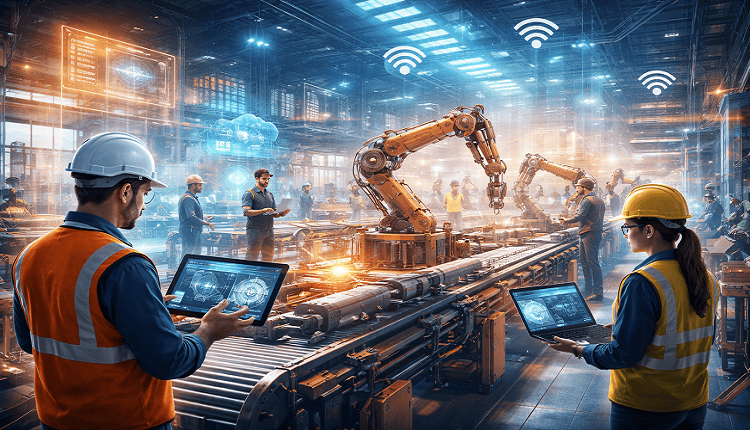
The manufacturing sector, considered to be the fulcrum of India’s journey to Viksit Bharat 2047, is adopting advanced technologies to modernise the way plants are run, and goods are produced. Digital twin, Robotics, Drones, Additive manufacturing etc. have demonstrated their capability in achieving productivity and sustainability goals set by companies.
To make India an Advanced Manufacturing Powerhouse by 2035, multiple policies like PLI, Make in India, India AI mission, DPDP act, Skill India mission, etc. will provide much needed impetus. However, India’s manufacturing sector is shifting its focus from productivity to ‘sustainability and innovation. What was once an efficiency-led system is now evolving into an intelligence-led ecosystem powered by advanced technologies, real-time data and a more holistic approach to competitiveness.
With the sector’s priorities now expanding, Manufacturing is moving beyond traditional boundaries. — building on PwC’s “Value in Motion” framework, the sector is embracing the seamless flow of capital, talent, and technology across industries to unlock new growth opportunities.
The forces driving this shift are primarily AI and Industry 4.0, with an eye now on the emerging Industry 5.0 era. According to our report, Decoding the Fifth Industrial Revolution, a commanding 93 percent of Indian manufacturers are embracing this next industrial age to blend sustainability with profitability. Industry 5.0 adoption is projected to lift revenues by over 6% in the next one to two years. More than half of manufacturers are already investing in lifelong learning and upskilling, underpinning a genuine bet on people as central players in this transformation.
Within this evolving landscape, five major shifts are shaping manufacturing in 2025:
Movement from experimentation to scale-up: AI-led use cases that were piloted only last year have now transitioned into core production environments. Companies across both discrete and process industries are already seeing benefits linked to improved uptime, better quality and reduced wastage.
Rise of digital twins: Manufacturers are increasingly creating virtual models of plants and processes to support better design and decision-making. These simulations make it easier to test multiple scenarios, optimise operations and reduce development time.
Workforce transformation and upskilling: With rapid technological adoption, companies are prioritising skill development to ensure their workforce remains future-ready. The growing convergence of OT and IT is also pushing organisations to build digital capabilities across all levels of the shop floor.
Cybersecurity: As OT-IT convergence becomes the norm, manufacturing companies are investing heavily in secure-by-design systems and AI-enabled threat prevention. Protecting industrial environments has become a strategic priority as digital connectivity expands.
Sustainability as a strategic imperative: ESG goals are no longer limited to reporting requirements; they are now deeply integrated into core business operations. Manufacturers are leveraging digital platforms to support decarbonisation, energy efficiency, safety and product quality—areas where digital maturity has grown substantially.
In addition to these broad shifts, several key technology trends continue to shape the sector’s transformation. AI remains at the forefront for improving productivity, quality and demand forecasting. IoT, manufacturing execution system (MES) and product lifecycle management (PLM) platforms are strengthening on time in full (OTIF) performance, enhancing inventory optimisation and supporting stronger quality control.
Digital twins are being used extensively both in operational efficiency and new product development. Cybersecurity remains foundational as digital adoption expands. And energy management systems are emerging as essential tools for real-time tracking and optimisation.
Looking ahead, the year 2026 will bring its own wave of developments that manufacturers should prepare for. Agentic AI use cases will begin to scale, offering new forms of autonomy in production workflows. Private 5G deployments will increase, enabling richer edge analytics across modern plants. Generative product design will accelerate R&D cycles. Clean-tech manufacturing will intensify as sustainability targets expand. Digital twins will become even more pervasive, influencing not just plant operations but product ecosystems end-to-end.
India’s growth story is increasingly powered by a strong and forward-looking manufacturing sector. From electronics to steel, the rise of modern industrial clusters reflects the effectiveness of supportive policies and a rapidly maturing ecosystem. As technology becomes deeply integrated with workforce capabilities, organisations will find themselves better positioned to differentiate in global markets. The year 2026 will favour companies that scale their technologies, invest in modern capabilities and stay aligned with emerging regulations—bringing India closer to its ambition of becoming a global manufacturing leader.