

AI at the core: How Blue Star is reimagining cooling through tech-led innovation
The company is pragmatic in its adoption of AI, focusing on use cases that solve real business problems.

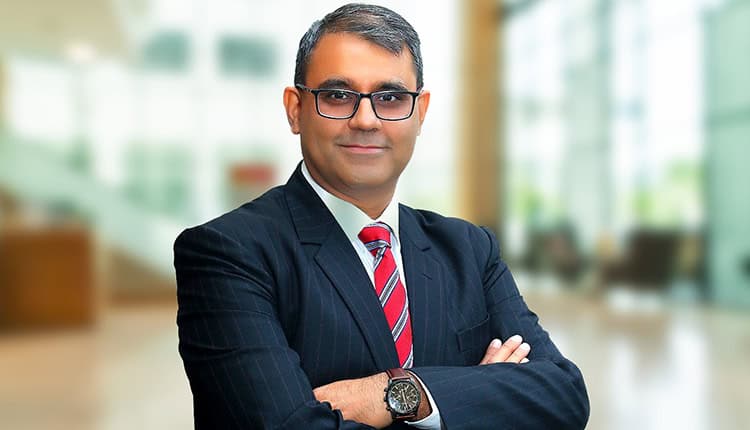

As one of India’s most trusted names in air conditioning and commercial cooling solutions, Blue Star is quietly but decisively reimagining how technology can drive growth, efficiency and customer experience across its diverse businesses. In an exclusive conversation with Express Computer, Udit Pahwa, Chief Information Officer, Blue Star, shares how the company is leveraging AI, analytics and connected platforms to improve decision-making, accelerate execution, enhance customer experience and build a future-ready organisation, while keeping a sharp eye on ROI and cybersecurity.
Blue Star is a household name for residential air conditioning. However, it operates on a much larger scale, managing massive commercial installations in airports, malls, and factories.
The company’s technology journey spans consumer products, large infrastructure projects and commercial cooling solutions. According to Udit Pahwa, CIO of Blue Star, innovation is closely aligned with how each business operates.
“Blue Star is widely known as a consumer brand for room air conditioners, but we also have very large commercial air conditioning and MEP project businesses. Each of these requires a different technology lens,” he says.
In the consumer space, Blue Star is already looking beyond connected devices to what Pahwa calls the next frontier i.e. autonomous air conditioners.
“Just like autonomous cars or driverless trains, we are piloting an autonomous air conditioner that can sense the room, understand temperature and moisture, and decide on its own how it should run. By factoring in multiple variables that influence cooling requirements, these AI-driven systems aim to optimise comfort, energy efficiency and performance without manual intervention,” explains Pahwa.
Betting big on AI
Blue Star is pragmatic in its adoption of AI, focusing on use cases that solve real business problems. Current applications include document summarisation, project reporting and GPT-enabled HR bots.
“The biggest impact will come from areas like autonomous cooling and machine learning-driven optimisation,” notes Pahwa.
The company has also successfully developed predictive maintenance models for commercial air conditioning systems.
“We can predict a compressor failure up to 15 days in advance, but the challenge today is ROI. The technology works, but large-scale deployment needs to make economic sense,” he points out.
One of the most tangible examples of AI-driven business impact at Blue Star lies in its large-scale project tendering process. Tender documents often run into thousands of pages and require detailed technical and commercial analysis. By deploying LLM-based document summarisation and conversational AI, the company has dramatically compressed this cycle.
“Earlier, a 2,000-page tender would take six to eight days for one person to analyse and prepare. Today, the same exercise takes six to eight hours. The same person can now respond to many more tenders, which means our sales funnel and pipeline capacity can increase multifold,” recalls Pahwa.
This shift has not only improved efficiency but also directly contributed to top-line growth for the company by enabling the business to pursue more opportunities with the same resources.
Pahwa also highlights that in commercial air conditioning and MEP projects, execution complexity is high, involving multiple stakeholders, subcontractors and dependencies. This is where the company has replaced spreadsheets, emails and informal communication with an AI-enabled project management and delegation platform. Field teams can update progress using simple commands, while the system automatically generates daily summaries and flags delays along the critical path.
“The tool gives us complete visibility into project delivery, from civil and electrical work to aesthetics and timelines. It helps us proactively identify cascading delays. In the next phase, we plan to offer this visibility to customers on a self-service basis,” adds Pahwa.
Becoming a data-driven enterprise
Blue Star is steadily transitioning towards data-based decision-making across functions. While the journey is still evolving, analytics already plays a critical role. For instance, in sales, the company is using data to sharpen market expansion strategies. This analysis blends internal ERP and CRM data with external market data to generate actionable insights for sales teams.
Similarly, on the manufacturing floor, connected systems provide real-time visibility into machine health, production targets and efficiency. The same data supports predictive maintenance initiatives aimed at minimising downtime and improving asset reliability.
“We analyse performance down to the pin code level, identifying which areas are leading or lagging in consumption. Supervisors and plant heads can see daily targets, run rates and machine-level efficiency on electronic dashboards,” states Pahwa.
Moreover, in a competitive consumer market, Blue Star is focused on delivering a seamless, omnichannel customer journey, from discovery and purchase to service and support. By maintaining a central customer data backbone, the company ensures that customer interactions remain consistent regardless of whether they happen on the website, mobile app, call centre or WhatsApp.
“The key is to stitch the digital thread across ERP, CRM, contact centres, mobile apps and digital channels. That’s what drives a higher customer experience index,” he adds.
Measuring ROI
Every digital investment at Blue Star is evaluated through a clear ROI lens. Pahwa explains that efficiency gains are translated into measurable cost savings and revenue potential. Beyond efficiency, AI-enabled processes have expanded the opportunity funnel.
“If a task that earlier took 12 hours can now be done in two hours, that’s a direct saving of 10 hours. We calculate the cost and productivity impact very clearly. If our funnel grows from 10 to 90 opportunities a month with the same resources, the business ROI on the top line becomes evident,” he adds.
Cybersecurity in an AI-driven world
With increasing digitisation, cybersecurity is a board-level priority at Blue Star. The company operates on a rolling three-year cybersecurity roadmap that is revisited every six months.
Pahwa states, “Three years is a very long time in cybersecurity. We constantly refine our roadmap based on emerging threats and technologies. Besides continuous monitoring of access privileges and system activity is critical in a connected ecosystem, as any slippage directly increases risk.”
AI is also transforming security operations, particularly in SOC environments. “AI can analyse logs and detect anomalies much faster than humans. That’s where it’s making a real difference,” he notes.
Building a future-ready workforce
For Blue Star, learning and reskilling extend well beyond IT and staying ahead of the curve requires a relentless focus on internal skill development.
Pahwa believes that in a world where technology shifts every few months, a long-term forecast can often be futile. The organisation conducts periodic skill assessments every six months, aligning current capabilities with anticipated needs over the next 12 to 18 months.
“Learning never stops, never should stop,” Pahwa asserts. By identifying specific individuals for targeted upskilling, the company ensures that its workforce is as modern as the technology they are building. As Pahwa puts it, this deep-seated commitment to growth is what will ultimately drive Blue Star into its next chapter of innovation.
The road ahead
Looking forward, Pahwa believes that AI will redefine both individual lives and enterprise operations. However, he views AI not as a replacement for human talent, but as a critical partner.
“Making AI coexist with the human skills is something that will really make the difference between the organisations of today and organisations of the future,” he concludes.
Watch full video: