

How is the IT sector’s outsourcing model changing with AI coming in?

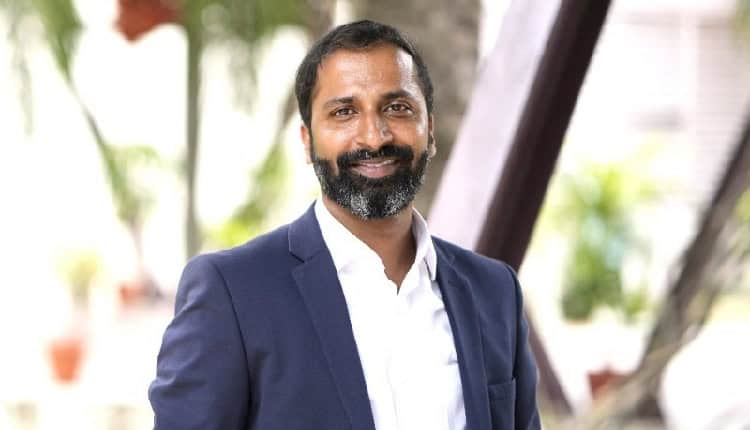

By Anupam Chaturvedi, Head of ZEISS Digital Partners, ZEISS India
For over three decades, India’s IT services industry has been synonymous with global outsourcing. Built on scale, process discipline, and cost efficiency, it became a cornerstone of enterprise digitalization worldwide. Today, artificial intelligence is reshaping that model quietly, steadily, and irreversibly. This is not a cyclical change. It is a structural one.
The shift from workforce scale to productivity scale
The traditional outsourcing model was straightforward: break work into tasks, standardising delivery, and scaling through large offshore teams.
Growth was linear, more people meant more revenue. Metrics such as headcount, utilisation, and blended rates dominated both boardroom discussions and contracts.
AI disrupts this logic. When software can write code, generate test cases, resolve incidents, and automate operations, output no longer grows in proportion to team size. Productivity becomes non-linear. A small, highly skilled team equipped with AI can deliver outcomes that once required hundreds of engineers.
For Indian IT services firms, this marks a decisive shift: competitive advantage can no longer be sustained by workforce scale alone. The differentiator increasingly lies in how effectively AI is embedded into delivery models.
What work gets outsourced is changing
AI has rapidly automated the foundational layers of traditional outsourcing boilerplate development, L1/L2 support, manual testing, data preparation, and reporting. These activities once fuelled large offshore pyramids.
Human effort is now moving up the value chain. Clients expect partners to design systems rather than merely execute tasks, to supervise AI-driven workflows, to manage exceptions, and to apply business and domain judgment where automation reaches its limits. Accountability for quality, resilience, and outcomes is becoming central.
In practical terms, outsourcing is evolving from task execution to system ownership. This elevates the role of domain expertise, architectural thinking, and decision-making capabilities that Indian firms must cultivate at scale.
Commercial models are under pressure
AI-driven productivity gains are also forcing a reset in commercial structures. Traditional time-and-material contracts were designed for incremental efficiencies over long horizons. AI collapses those timelines.
Enterprises are increasingly unwilling to pay old prices for AI-enabled delivery. This is accelerating a move toward outcome-based, consumption-based, and gain-share pricing where payment is tied to results, not effort. Contracts are becoming more flexible, with shared risk and reward. But there is also a challenge how efficiently you define your business models and quantify outcome based solutions.
For service providers, this creates short-term pressure but long-term opportunity. Firms that can reliably deliver outcomes using AI can expand margins and deepen strategic relationships. Those that rely on effort-based billing will find themselves commoditised.
The rise of the digital workforce
A significant but underappreciated shift is the emergence of a “digital workforce.” Alongside employees and outsourced teams, enterprises now deploy AI agents, copilots, bots, and autonomous systems that operate continuously in the form of Accelerators, Platforms or tools.
Managing this blended workforce requires capabilities well beyond traditional service delivery AI governance, data stewardship, security, compliance, and ethical oversight. Indian IT services firms are increasingly expected to help clients design, deploy, and operate these digital workers responsibly.
The implication is profound: outsourcing partners are no longer just suppliers of talent. They are becoming co-architects of enterprise operating models.
Hybrid sourcing and the new role of GCCs
AI is also reshaping sourcing strategies. Rather than driving everything toward outsourcing or insourcing, it is accelerating hybrid models.
Strategic data, proprietary AI models, and core intellectual property increasingly remain within the enterprise, often in GCCs based in India. At the same time, enterprises partner with IT services firms for scale, modernisation, AI operations, and continuous optimisation.
This convergence of outsourcing, captives, and AI is particularly relevant for India, where GCCs and service providers now coexist within the same ecosystem. Collaboration, not competition, is becoming the dominant pattern.
What this means for India’s IT services leaders
For India’s IT services industry, AI represents both unavoidable disruption and generational opportunity.
The pressure points are clear. Entry-level and repetitive roles will shrink. Pyramid-heavy models will come under strain. Clients will demand faster ramp-ups, sharper expertise, and measurable business impact.
Yet the opportunity is equally significant. Global demand for AI-enabled transformation from application modernization to intelligent operations is expanding rapidly. Providers that invest in AI platforms, reusable IP, deep domain capability, and talent transformation can move up the value chain and unlock non-linear growth.
The firms that succeed will increasingly resemble technology companies rather than traditional outsourcers defined by platforms, products, and trust, not just people.
Redefining, not diminishing, outsourcing
AI is not signaling the end of outsourcing. It is redefining it.
Outsourcing is evolving from people-centric to productivity-centric, from effort-based to outcome-driven, from transactional delivery to strategic partnership. For India’s IT services industry, the next chapter will not be written by who employs the most people, but by who can best combine human judgment and artificial intelligence to deliver outcomes that truly matter.