

How IT, Telecom and Signaling Enabled a Landmark Rail Project
Inside India’s most complex rail project powered by digital systems

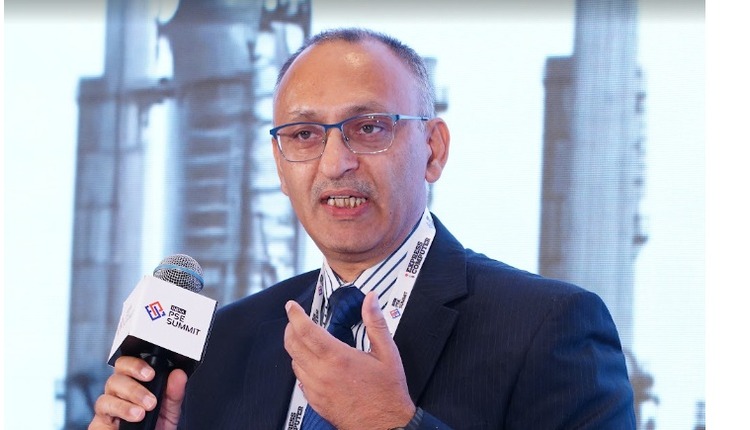

The Udhampur–Srinagar–Baramulla Rail Link stands as one of India’s most challenging infrastructure projects, combining extreme terrain with advanced digital systems. In this conversation, Ashwani Dayal, General Manager, IT – S&T at IRCON INTERNATIONAL LIMITED (IRCON) shares insights on how telecom, signaling, AI-enabled monitoring, and predictive technologies are transforming railway operations and safety in remote geographies. Dayal was also Project Head for Signaling & Telecom during the project.
The USBRL project is considered one of India’s most complex infrastructure projects. What were the key IT, signaling and telecom challenges?
The biggest challenge was the lack of ecosystem and availability of resources in such difficult terrain. When IRCON started the project from Baramulla-Srinagar-Banihal in 1999, there was no major telecom network operator in the Valley, no reliable connectivity, and even basic IT infrastructure was absent. IRCON had to build everything from scratch—networks, communication systems, and operational frameworks.
Connectivity was a major hurdle. We initially depended on BSNL landline phones, Satellite phones and temporary local networks. Internet connectivity was unreliable, and at times completely shut down due to security situations. Additionally, there was a shortage of skilled manpower willing to work in such remote and challenging conditions.
To address this challenge, we consciously focused on building local technical capabilities. Local residents were hired across various roles, including technicians, junior engineers, works engineers, and support staff, based on their qualifications and aptitude. They were trained during the execution of the project and became actively involved in building and commissioning the systems themselves, creating a strong sense of ownership and responsibility.
Within the Signaling, Telecom, and ITC functions alone, I recruited 16 young local professionals as Works Engineers on a contractual basis. Most were fresh diploma or degree holders in telecommunications, electronics, computer science, or related fields. The experience they gained while working on the USBRL project significantly enhanced their career prospects. Today, many of them have secured permanent positions in the industry, while some have been absorbed by OEMs responsible for maintaining the USBRL systems themselves.
Despite this, we gradually built a functioning ecosystem and successfully enabled rail operations in one of the most difficult geographies in the world.
It is important to note that the USBRL project was not executed by IRCON alone. It was delivered through the coordinated efforts of three major government organisations working in parallel. These included IRCON INTERNATIONAL LIMITED (IRCON)., Konkan Railway Corporation Ltd. (KRCL), and the Northern Railway Construction Organisation (NRC), all of them working under the aegis of Indian Railways. Together, these organisations contributed their expertise and capabilities to successfully execute one of India’s most complex railway infrastructure projects.
Large infrastructure projects generate enormous amounts of operational and engineering data. How are digital platforms, monitoring systems, and analytics being used to improve safety, maintenance, and decision-making in the USBRL project?
Technology and real-time monitoring are central to the safe operation of the USBRL corridor. One of the most significant systems we have deployed is the Integrated Tunnel Communication System (ITC), designed specifically for long tunnels and challenging operating conditions.
The project includes extensive surveillance and communication infrastructure, including approximately 2,200 CCTV cameras in IRCON portion, emergency SOS communication systems, public address systems, and dedicated operational communication networks. Every 50 metres inside the tunnel is monitored through CCTV coverage, while SOS phones are installed at regular intervals of 200 metres to ensure passenger safety and emergency response capabilities.
A particularly important innovation is the deployment of leaky cable communication technology across tunnel sections for VHF communication. Commonly used in mining environments, this technology enables uninterrupted communication for train drivers, guards, maintenance teams, and operational staff even deep inside long tunnels where conventional radio signals cannot function effectively.
All these systems are supported by a redundant fibre-optic backbone and Tunnel Control Rooms (TCRs), which function as dedicated operational control centres. These facilities host high-capacity storage systems, servers, video management platforms, and communication systems that continuously collect, process, and analyse operational data. I strongly believe that, in the future, as Indian Railways advances its Remote Diagnostic and Predictive Maintenance Systems (RDPMS) initiatives, such data-driven monitoring capabilities will play an increasingly important role in predictive maintenance, asset reliability, and operational safety.
What role does data and predictive maintenance play in such a large infrastructure system?
Data is central to railway safety and operations. We are implementing and testing Remote Diagnostic and Predictive Maintenance Systems (RDPMS) in one of our projects, which help monitor the health of S&T equipment and predict failures before they occur.
Every system—from signaling to track circuits and interlocking—generates real-time data which is captured for operational analysis. This data is analysed to improve maintenance planning and operational reliability.
We are moving towards AI-based surveillance and monitoring system with centralised command control systems that will further enhance decision-making and safety.
How has cybersecurity been managed in such a sensitive and closed network environment?
Cybersecurity has been implemented at multiple layers. The system is a closed network, not connected to the internet, which significantly reduces external threats.
We have deployed firewalls, disabled unused ports, and ensured strict physical and software-level controls. Unified Network Monitoring Systems continuously track all devices across the network.
Regular VAPT audits by STQC is conducted and compliance are maintained. Additionally, we use AI-enabled video management systems and face recognition technologies integrated with security agencies for enhanced protection.
How did you integrate AI and emerging technologies into a project that started decades ago?
Integrating AI into an ongoing legacy project was challenging. During execution, standards evolved, and new cybersecurity and AI guidelines were introduced.
We had to modify procurement systems, upgrade hardware, and ensure compliance with RDSO and security regulations. AI-enabled software and supporting cameras, video analytics, and face recognition systems were implemented.
Today, systems are capable of detecting incidents like camera tampering, abandoned objects, human movement anomalies and track crossing, etc. The video analytics system installed in the USBRL project permits the addition of new analytics as per evolving requirements and AI based machine learning algorithms improve its accuracy overtime. However, technology continues to evolve rapidly, and continuous upgrades are necessary.
If the project were designed today, what would you do differently?
If we were to design it today, we would adopt a more integrated digital ecosystem with centralised command control systems, private cloud-based SaaS may shape up in future networks, monitoring, storage and analytics software. AI capabilities shall form a core part of the system. However, cost will be much more than what it is for non AI based or partial AI based systems.
Railway systems which works on proven fail safe tech, cannot be fully exposed to open networks due to security concerns. Therefore, isolation and controlled environments will remain essential.
We are also moving towards building our own dedicated networks and infrastructure to ensure security and operational independence.
Do you see a future where the entire corridor operates as a digital twin system?
Absolutely. In many ways, the foundation for digital twins has already been laid through the technologies used during the design and execution of the USBRL project. We carried out drone-based surveys, LiDAR mapping, aerial surveys using helicopters, and photogrammetry to create highly accurate 3D models of critical infrastructure. Detailed digital replicas of major structures such as bridges were developed, capturing everything from structural components to engineering specifications.
Even today, critical assets like tunnels, bridges and tracks are monitored in real-time through an extensive network of sensors which provide real time data for parameters such as wind conditions, weather events, and operational safety thresholds. These systems enable real-time monitoring and automated operational responses when required.
While a full-scale digital twin environment for USBRL’s operational management is not yet in place, the necessary digital infrastructure and data networks have already been established. As centralised command and control centres evolve, the transition toward a comprehensive digital twin framework will become much easier.
What is your overall takeaway from this project in terms of digital infrastructure evolution?
This project demonstrates how engineering, telecom, and IT can come together to solve extreme challenges. It has transformed connectivity in Jammu & Kashmir and made the region an all-weather rail corridor.
We have successfully implemented blastless tracks, advanced signaling systems, and real-time monitoring infrastructure.
Indian Railways is evolving rapidly and is among the most technology-intensive organisations in the country. The learnings from this project will not only shape future railway corridors and digital infrastructure projects across India but has a deep impact on entire transportation system infrastructure in the country.