

We are the first Coca Cola bottler in the world to implement Zero Trust: Uday Singh, Group CIO, Ludhiana Beverages

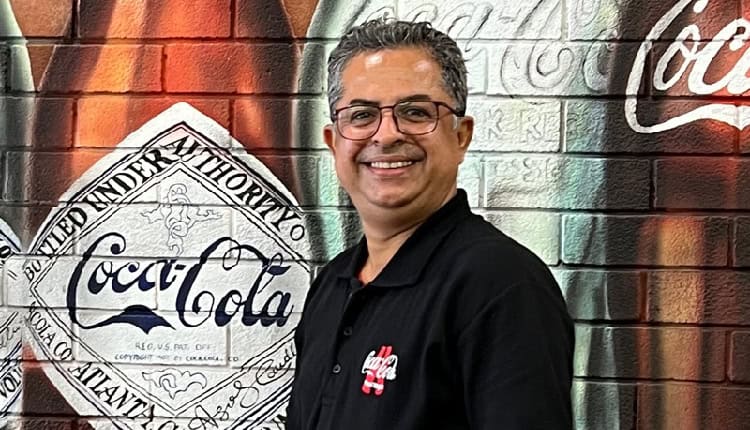

When Uday Singh speaks about technology, he does so not in abstract buzzwords, but in metaphors that resonate with business reality. “Data is the blood,” he says. “Every second it is flowing through the organisation. If you do not protect it, the whole body collapses.”
As Group CIO of Ludhiana Beverages, one of Coca Cola’s key bottling partners in India, Singh sits at the intersection of manufacturing, logistics, sustainability, compliance, and digital innovation. In an era where AI, cloud, and data are rewriting the rules of enterprise IT, his approach is unapologetically practical. “Innovate fast, but secure faster.”
AI will rule but only with security
Looking ahead to 2026, Singh sees Artificial Intelligence, particularly generative AI, as the defining force of enterprise transformation.
“AI is number one,” he says, “but AI without security is dangerous. If AI comes with security, the company will survive. If it does not, the company will not.”
For Singh, AI is not just about automation or chatbots. It is about intelligence embedded across every business process. From ERP and CRM systems to new age applications, he envisions a future where enterprises build a single unified digital layer that connects all functions of the organisation.
“The core system will always be there,” he explains. “But on top of it, we need applications that club everything together so one app can run the whole company anywhere in the world.”
Zero Trust: No one gets a free pass
As organisations rush to adopt AI, Singh believes governance must run in parallel. At Ludhiana Beverages, that philosophy has translated into something bold, a Zero Trust network.
“We are the first Coca Cola bottler in the world to implement Zero Trust,” he says. “Whether you are the CIO, the Managing Director, or an employee, you get only the access you are allowed.”
Every action is governed by systems, not people. Applications monitor compliance, data access is tightly controlled, and anything that violates policy is blocked automatically. This ensures that sensitive information from production data to customer records remains protected and audit ready.
“Your data is one hundred percent compliant,” Singh explains. “You cannot see what you are not supposed to see.”
Modernisation is not a technology problem, it is a people problem
If AI and cloud are the future, what holds companies back from adopting them, Singh answers without hesitation, “Culture.”
In regions like Punjab, where many employees spend twenty or thirty years in the same organisation, legacy systems are deeply tied to comfort and habit. The real challenge is not replacing old software. It is changing mindsets.
“You do not start with IT. You start with all departments,” he explains. “You train them. You share the pros and cons. You tell them the future plan.”
He dismisses the fear that AI will take away jobs. “AI is just code,” he says. “It runs on data that humans give it. We build models. We train them. Bigger data makes better models nothing more.”
“The key is openness. When employees understand where the company is going and how they fit into that journey, most will adapt. Maybe not one hundred percent, but if you change eighty percent of the mindset, adoption happens.”
Why data is more valuable than ever
For Singh, data is not just an IT asset. It is the lifeblood of the enterprise.
“Every second, data is coming in,” he says. “And just like blood, you cannot increase it or waste it carelessly. You must protect it.”
That protection is driven by two forces, privacy and law.
“Data has to be protected for two reasons. One is privacy. The second is the statutory law of the government,” Singh says.
India’s new digital privacy legislation, the DPDP Act, and the upcoming stricter regulatory framework are pushing companies to rethink how they store, process, and govern information.
“Anything new creates confusion at first,” he points out. “Everyone reads it in their own way. But soon everyone will be reading it the same way.”
Why Ludhiana Beverages turned to blockchain
One of the most striking examples of Singh’s security first thinking is Ludhiana Beverages’ use of blockchain.
The company is responsible for recycling plastic bottles under a government mandated sustainability program. To prove compliance, it must show exactly how many bottles are collected and recycled.
“How do we show that the data is real?” Singh asks. “We put it on blockchain.”
Unlike traditional databases, blockchain cannot be manipulated. Even administrators cannot delete or alter records.
“In a normal database, if I am admin, I can delete anything,” Singh explains. “In blockchain, I cannot.”
This immutability is why banks, governments, and now manufacturing companies are moving toward blockchain based systems.
“Blockchain is the new data where we cannot fetch or delete a single record,” he says. “It is one hundred percent secure.”
Learning beyond the books
At the CIO Association Punjab Chapter, Singh found what he values most in leadership circles, real experience.
“This is a big opportunity for CIOs to understand what they are doing, what are the pros and cons, and to share their ideas,” he says. “People come from different industries with different technologies, and through real time experience, not just books, we get the best outcomes.”
A simple philosophy for a complex future
In a business environment dominated by rapid innovation, Singh’s philosophy stands out for its clarity and realism.
“AI is powerful, but it must be controlled with security and governance,” he believes. “Data is the blood of the business, and if it is not protected, the company cannot survive.”
Beyond technology, he believes in transparency with people.
“If you are open and clear about where the company is going and who the competitors are, people are ready to accept change,” Singh avers. “Some will still have fear, but if you change the mindset of eighty percent, the organisation moves forward.”
Together, these beliefs define how Ludhiana Beverages is building a future that is digital, secure, compliant, and most importantly, human centred.
From a bottling plant in Punjab to the frontlines of digital transformation, Uday Singh’s vision reflects a wider shift underway in Indian enterprise. As organisations grapple with artificial intelligence, data regulation, and rising cyber threats, his message is both timely and grounded. Technology will shape the future, but trust will decide who survives it. And in that trust first approach, Ludhiana Beverages is positioning itself not just to adapt to change, but to lead it.
